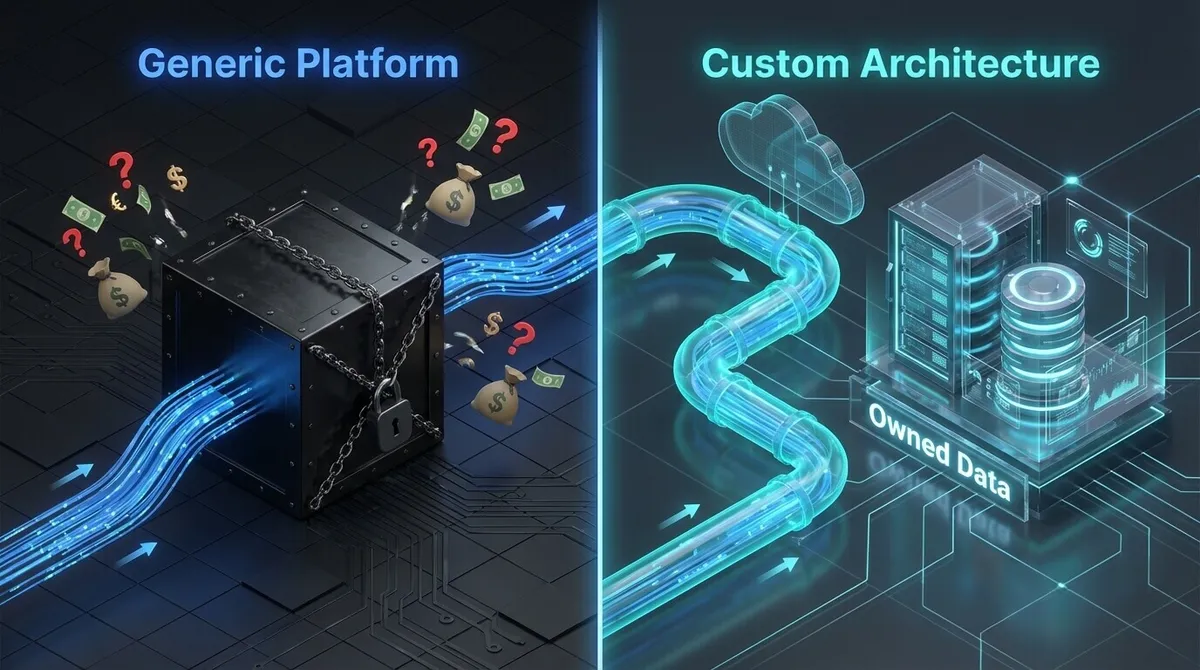
For Calgary event organizers and venue owners, the cost of inaction is measured in long queues, crashed servers during ticket drops, and lost ancillary revenue due to slow entry. Relying on generic, third-party ticketing platforms often means surrendering up to 15% of your gross revenue in fees and losing ownership of valuable attendee data.
The strategic solution is Custom Event Ticketing Software that integrates seamlessly with mobile apps and on-site entry hardware. By owning the architecture, Canadian businesses ensure PIPA compliance, data sovereignty, and operational stability.
- Modeled Estimate: Venues switching to proprietary mobile entry systems typically see a 20–30% reduction in door staff labor costs while increasing entry throughput by 2x.
Why should Calgary venues invest in Custom Event Ticketing Software?
Custom Event Ticketing Software is a proprietary digital infrastructure that allows Canadian event organizers to eliminate third-party commission fees and retain full ownership of attendee data, directly increasing profit margins and brand equity.
The Technical Reality: Off-the-shelf platforms operate as Black Boxes. You do not own the code, and you often do not own the customer data. Custom development, typically using frameworks like Flutter for cross-platform compatibility, builds a direct pipe between the ticket buyer and your database.
The Calgary → Alberta → Canada Context In Alberta, data privacy is governed by the Personal Information Protection Act (PIPA). Using US-based third-party platforms can sometimes create rigorous compliance headaches regarding where data is stored and how it is used. A custom solution built by a local partner ensures data residency requirements are met. Furthermore, relying on US platforms leaves you vulnerable to exchange rate fluctuations on SaaS fees.
Before vs. After
- Before: Paying 10% per ticket in fees; data is siloed in a third-party system; generic branding.
- After: $0 per ticket fees; 100% data ownership; app serves as a brand marketing channel.
Key Metrics
- Benchmark Range: 8–15% increase in net revenue by eliminating third-party ticketing commissions.
- Modeled Estimate: 40% increase in marketing opt-ins due to seamless app integration.
Implementation Steps
- Audit current ticketing fee structures to determine the break-even point for custom development.
- Define data schemas for attendee profiles to ensure PIPA compliance.
- Select a cross-platform framework to ensure the app works on iOS and Android simultaneously.
How does a QR Code Entry System reduce operational bottlenecks?
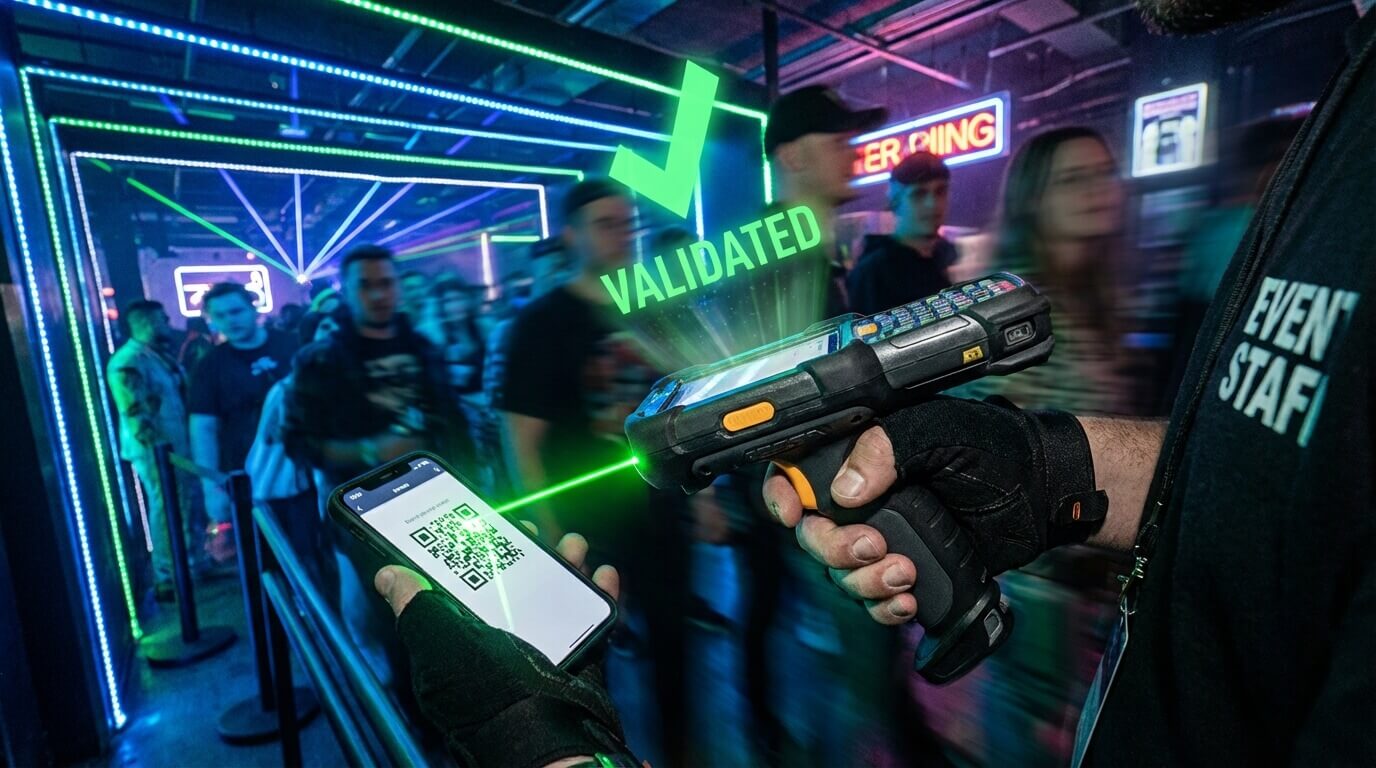
A QR Code Entry System is a rapid-scanning access control solution that allows event staff to process thousands of attendees per hour using standard mobile devices, significantly reducing entry wait times.
The Technical Reality Legacy entry methods (paper lists or slow scanners) create choke points. A modern QR code entry system utilizes local caching on scanning devices. This means even if the venue's Wi-Fi fluctuates, a common issue in concrete stadiums or outdoor festivals, the scanner can still validate the ticket against a locally stored, encrypted database of valid hashes.
The Calgary → Alberta → Canada Context Calgary weather is a legitimate operational constraint. In winter months, forcing attendees to wait outside due to slow check-ins is a safety risk and a customer experience disaster. Speed is not just a luxury; it is an operational necessity. Additionally, high labor costs in Alberta mean that every extra minute spent checking in a guest costs the organizer money in staffing hours.
Before vs. After
- Before: Paper guest lists, slow searches, long outdoor lineups in -20°C.
- After: Sub-second scans, automated validation and real-time dashboard updates.
Key Metrics
- Verified Novotix Outcome: No more paper, no more uncertainty.
- Scenario Benchmark: Processing speed increases from 15 seconds per person (manual) to 3 seconds per person (digital scan).
Implementation Steps
- Deploy handheld scanners or utilize staff smartphones with a dedicated scanning app.
- Implement offline mode logic to ensure scanning works without constant internet.
- Train door staff on exception handling (e.g., duplicate scans or invalid tickets).
How do you manage High-Traffic Server Load during ticket releases?

High-Traffic Server Load management uses auto-scaling backend architecture to ensure ticketing platforms remain stable during viral demand spikes, preventing revenue loss and reputational damage.
The Technical Reality: When a popular event goes on sale, traffic spikes can jump from 100 users to 100,000 users in seconds. Standard hosting crashes under this pressure. Scalable backend architectures (using technologies such as AWS Lambda or Kubernetes) automatically spin up new server instances to handle load and spin them down when traffic subsides.
The Calgary → Alberta → Canada Context: For major Alberta events, ticket demand is concentrated. A crash during a ticket drop is not just a technical failure; it is a PR crisis. Canadian users expect the same reliability from local venues as they get from global giants.
Before vs. After
- Before: Site timeouts, frustrated users venting on social media, lost sales.
- After: Elastic infrastructure handles spikes seamlessly; 100% transaction completion rate.
Key Metrics
- Scenario Benchmark: 99.99% uptime during peak load events.
- Modeled Estimate: Prevention of 15–20% cart abandonment caused by slow page loads.
Implementation Steps
- Architecture review to move away from monolithic servers to microservices.
- Implement load balancing to distribute traffic evenly across servers.
- Set up automated stress testing before major ticket releases.
Case Study Spotlight: Novotix
Client Profile
- Project: Novotix
- Focus: Event Management & Ticketing
- Tech Stack: Mobile App Development (Flutter), Scalable Backend
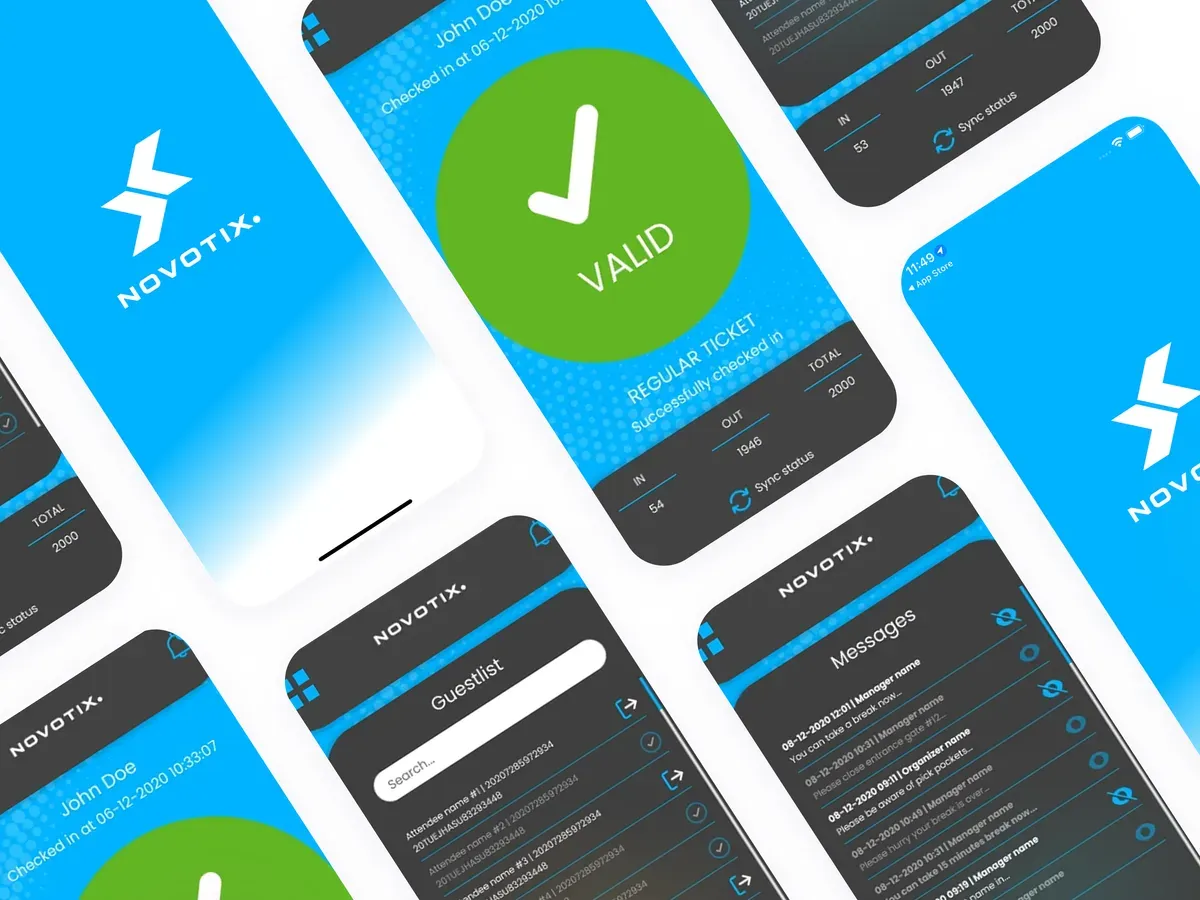
The Challenge Novotix faced a major problem common in the event industry: messy event check-ins and scattered attendee data. Relying on paper lists or disjointed systems led to uncertainty at the door, slow entry flows, and a lack of real-time visibility for event planners.
The Fantech Solution Fantech Labs partnered with Novotix to build a comprehensive Event Management Mobile App.
- Architecture: We implemented a scalable backend architecture to handle high-traffic data syncs.
- Mobile Tech: Utilizing Flutter, we built a cross-platform app that ensures a consistent experience on both iOS and Android.
- Features: The app includes barcode scanning for instant entry, a live dashboard for reporting, and real-time attendee tracking.
The Results
- Verified Outcome: Transitioned planners to complete control with zero reliance on paper lists.
- Operational Efficiency: Enabled instant view of who’s checked in and who’s pending, eliminating manual counts.
- User Experience: Created a simple, mobile-friendly interface that reduced training time for temporary event staff.
ROI & Risk Snapshot for Executives
ROI Factors
- Labor Efficiency: Reduce door staff requirements by replacing manual checks with digital entry systems.
- Data Monetization: Own your data to build lookalike audiences for future marketing, lowering Customer Acquisition Cost (CAC).
- Reliability: Auto-scaling prevents revenue loss during high-demand on-sales.
Risk Mitigation
- PIPA Compliance: Local data handling ensures you meet Alberta’s privacy standards.
- Connectivity Failover: Offline-first architecture protects against venue Wi-Fi failure.
- Fraud Prevention: Digital tokens (QR/RFID) are significantly harder to counterfeit than PDF printouts.
Why Fantech Labs?
We are not just app developers; we are enterprise architects. We understand that an event app isn't just about a pretty interface, it's about the high-traffic server load handling the backend and the specific operational realities of Calgary venues.
- Local Expertise: We build for the Canadian market, considering local privacy laws and integration needs.
- Tech Mastery: From Flutter development to complex RFID wristband integration, we handle the full stack.
- Proven Results: As seen with Novotix, we turn messy logistical problems into streamlined digital assets.
FAQ: Event Technology Strategy
Q: Is custom event ticketing software expensive to build?
A: While the initial CAPEX is higher than a subscription, the OPEX savings are massive. If you process significant ticket volume, saving the 5–10% third-party fee typically yields an ROI within 12–18 months.
Q: How does RFID wristband integration work with the app?
A: RFID wristbands are paired with a user's profile in the app. Scanners at the venue read the chip via Near Field Communication (NFC), allowing for entry speeds even faster than QR codes, often under 1 second per person.
Q: Can the app work if the internet goes down at the venue?
A: Yes. We build Offline-First apps. The scanners download the encrypted guest list before the event. They can scan and validate offline, syncing the data back to the server once connectivity is restored.
Q: Is Flutter the best choice for an event app?
A: For most use cases, yes. Flutter allows us to write one codebase that deploys to both iOS and Android. This reduces development costs and ensures feature parity for all your attendees.
Q: How do we handle data privacy for Canadian attendees?
A: We architect the database to ensure Canadian user data resides on servers that comply with data sovereignty preferences, and we implement strict access controls to meet PIPA standards.
About the Author
Written by Hassan Munir, Senior Software Engineer & Product Lead at Fantech Labs
As a Senior Software Engineer at Fantech Labs, Hassan specializes in high-performance mobile architectures for the Canadian market. He led the technical development of the Novotix platform, focusing on offline-first entry systems, cross-platform Flutter development, and scalable backends that handle viral ticket demand without crashing.