The Hidden Cost of "Fast and Cheap"
In the digital landscape, speed often masks risk. For business owners and executives, the allure of a pre-built website template is understandable: it promises a quick launch at a low initial cost. However, for growing companies in Calgary, this short-term shortcut frequently creates a long-term liability.
A template is not an asset; it is a rented framework filled with bloated code, unnecessary features, and security vulnerabilities that you cannot control. Relying on generic themes introduces Competitive Risk (you look like everyone else), Performance Risk (slow load times hurt SEO), and Scalability Risk (you cannot build complex features later).
At Fantech Labs, we believe your digital infrastructure should be an investment that compounds in value, not a technical debt that accumulates interest. Moving from a strategic Figma design to clean, custom code is the only way to ensure your platform serves your business objectives rather than limiting them.
Who This Is For
This article is specifically for:
- Calgary Business Owners are tired of websites that break when new features are added.
- Founders & Executives building platforms requiring custom functionality (User Dashboards, Admin Panels).
- Marketing Directors seeing low conversion rates due to poor mobile performance.
- Decision Makers evaluating a custom web design agency in Calgary.
The Template Trap: Why "Ready-Made" Fails Growing Businesses
When you purchase a template, you are buying a product designed to sell to thousands of people, not a solution designed for your specific business logic.
1. Code Bloat and Performance Drag
Templates often load hundreds of scripts and styles to support features you will never use.
- The Risk: Slow load times increase bounce rates and lower your Google rankings.
- The Business Impact: You pay for traffic that leaves before the page loads.
2. Security Vulnerabilities
Popular templates are common targets for hackers because one vulnerability works across thousands of sites.
- The Risk: Data breaches and compromised user information.
- The Business Impact: Reputational damage and potential regulatory fines.
3. The "Frankenstein" Effect
Trying to force custom functionality (like a client portal or appraisal tool) into a rigid template often breaks the site architecture.
- The Risk: Unstable platforms that require constant, expensive patching.
- The Business Impact: Higher long-term maintenance costs compared to a custom build.
🛡️ Is Your Current Site a Security Liability?
If your website relies on outdated plugins or a heavy template, you may be exposed to unnecessary risk. Let's verify your infrastructure.
👉 Request a Preliminary Compliance Check
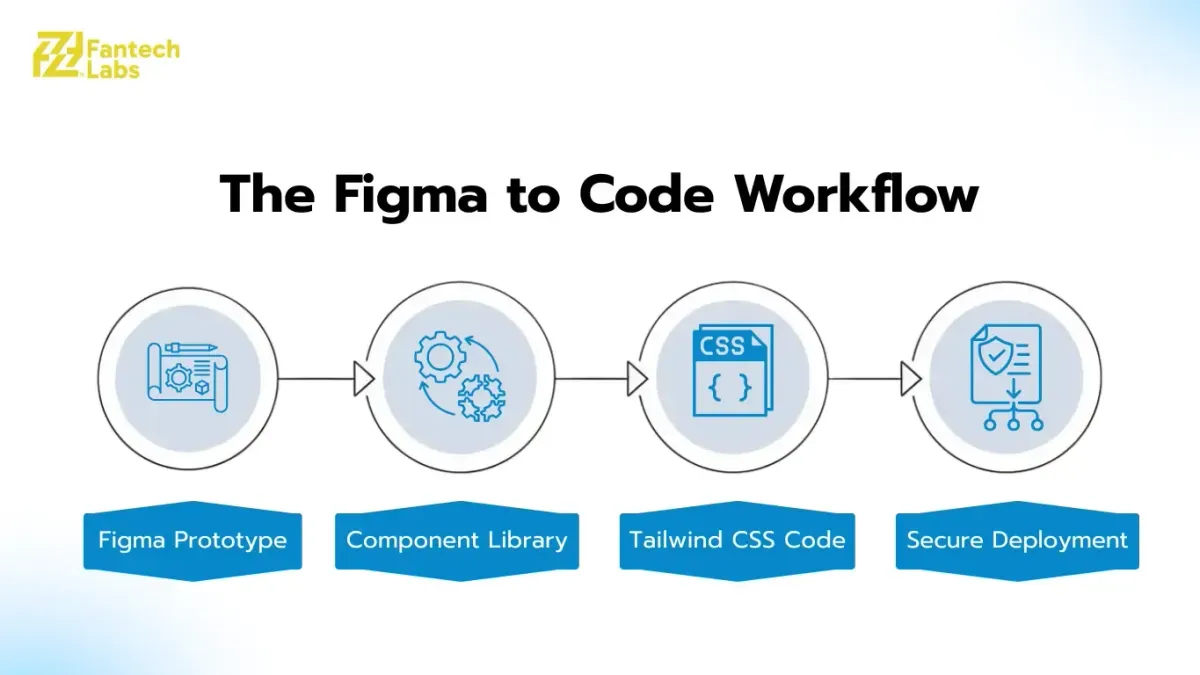
The Solution: The Strategic Figma to Code Workflow
A Figma to HTML service is not just about making things look pretty; it is about architectural precision. By designing a custom UI/UX design system first, we eliminate guesswork and align every pixel with your business goals.
Step 1: High-Fidelity Prototyping in Figma
Before a single line of code is written, we visualize the entire user journey.
- Business Value: We catch logic errors in the design phase, where they are cheap to fix, rather than during development, where they are expensive.
- Role: Defines the Component Library and Auto-Layout structures to ensure consistency.
Step 2: Clean Tailwind CSS Development
We translate designs into lightweight, utility-first code.
- Business Value: Faster load times and easier maintenance. A developer can update a button style globally in minutes, not hours.
Step 3: Responsive Breakpoints & Mobile Logic
We don't just "shrink" the desktop site. We design specific interactions for mobile users.
- Business Value: Capture the 60%+ of traffic that originates from mobile devices in the Calgary market.
Real World Application: HomeAppraised [Case Study]
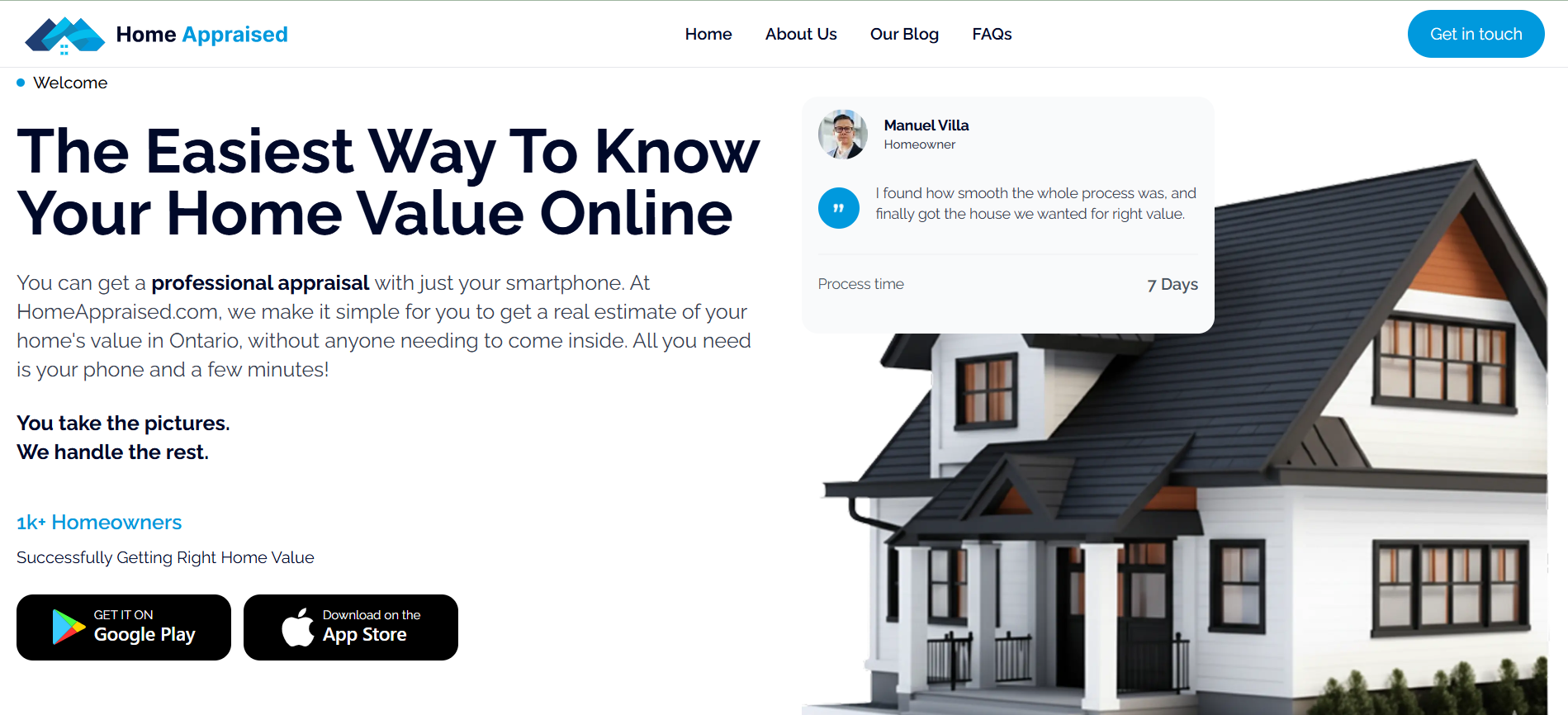
Client: HomeAppraised (Real Estate Tech) Location: Ontario / Canada
The Business Challenge
HomeAppraised needed to disrupt the real estate market by allowing homeowners to get property values without physical appointments. A standard template could not handle the complexity of:
- Secure photo uploads.
- Role-based access (Homeowners vs. Certified Appraisers vs. Admins).
- Synchronized data across Web, iOS, and Android apps.
The Strategic Solution
As a strategic partner, Fantech Labs delivered a custom end-to-end ecosystem. We moved from Figma prototypes to a fully custom build involving:
- Web App & Admin Panel: A secure backend for appraisers to review submissions and generate reports.
- Cross-Platform Development: Native Android and iOS apps with intuitive navigation for easy photo uploads.
- Quality Assurance (QA): Rigorous testing to ensure data integrity and security compliance.
The Outcome
By bypassing templates and building a custom architecture:
✅ Scalability: The platform handles high traffic volumes without crashing.
✅ Efficiency: Appraisers can issue reports significantly faster via the custom dashboard.
✅ Trust: A professional, bug-free interface established immediate credibility with homeowners.
Key Takeaway: A template serves content. A custom system delivers a service. HomeAppraised is now a fully functional digital product, not just a marketing brochure.
🚀 Planning a Complex Web Application?
Don't risk your launch on rigid templates. Get a professional opinion on your tech stack before you build.
👉 Get a Free Architecture Review
Why Custom Design Systems Reduce Risk
Transitioning to a custom build provides control. When you work with a specialized custom web design agency in Calgary, you are purchasing:
1. Brand Consistency
Using a strict Component Library ensures that your brand looks identical across your marketing site, your web app, and your mobile interface. This builds subconscious trust with your users.
2. Regulatory Compliance
For industries like real estate, finance, or health, data handling is critical. Custom code allows us to implement specific security protocols (like role-based access control seen in HomeAppraised) that off-the-shelf themes cannot guarantee.
3. Future-Proofing
Tailwind CSS development and modern frameworks allow for modular updates. When you want to add a new feature in 2026, we don't have to rebuild the entire site. We simply add a module.
Why Fantech Labs?
We are not just designers; we are technical strategists based in Calgary. We understand that your digital presence is a business critical asset.
- Local Expertise: We understand the Western Canadian market dynamics.
- No Outsourcing Risk: You speak directly to the architects building your system.
- ROI Focused: We prioritize features that drive revenue and reduce operational friction.
Conclusion: Asset vs. Liability
In the digital economy, your code is part of your valuation. A template-based site is a depreciating asset that becomes harder to maintain over time. A custom design system is an appreciating asset that scales with your revenue.
If you are ready to move from "good enough" to "market leader," the transition starts with professional design and ends with clean, custom code.
Ready to Secure Your Digital Infrastructure?
Stop relying on generic solutions for your unique business problems. Let’s discuss how a custom design system can reduce your operational risk and improve user conversion.
Book Your Confidential Strategy Session
FAQ
1. Why is a custom website more expensive upfront than a template?
A template is a mass-market product. A custom website is an engineered solution tailored to your specific business logic, security requirements, and conversion goals. The higher upfront investment creates a robust foundation that reduces long-term maintenance costs and eliminates the need for expensive rebuilds when you scale.
2. How long does the Figma to HTML process take?
The timeline depends on complexity. However, because we define all logic in the high-fidelity prototyping phase (Figma), the actual coding phase is significantly faster and less prone to errors than modifying a template. A typical B2B custom build takes 6–10 weeks from strategy to launch.
3. Can you convert my existing design into a custom coded site?
Yes. We specialize in taking existing Figma, XD, or Sketch files and refactoring them into clean, semantic, and high-performance HTML/Tailwind CSS. This is often the best way to improve site speed and SEO without changing your visual branding.
Author Bio
Written by Zaeem Khalid, Senior Digital Strategist & Technical Architect at Fantech Labs
As a Senior Digital Strategist and Technical Architect at Fantech Labs, Zaeem specializes in converting complex business requirements into scalable, secure digital architectures. He helps Canadian businesses move away from rigid templates to custom, high-performance web systems that drive revenue and offer long-term scalability.