Medical App Development in Calgary: Innovation Without Compliance Is a Liability
In Alberta’s healthcare sector, a great idea is not enough. If your digital platform is not architected to meet the strict demands of the Health Information Act (HIA), you aren't building an asset—you are building a legal liability.
Many founders and clinic directors in Calgary overlook the severity of data privacy laws until it is too late. A single breach of patient data, or a failure to pass a Privacy Impact Assessment (PIA), can lead to fines exceeding $50,000, mandatory breach reporting to the OIPC, and immediate operational shutdowns.
The risk is not just financial; it is reputational. In a city as tight-knit as Calgary, losing patient trust due to a security oversight is a mistake most clinics cannot recover from. When we build medical software, we don't just write code; we engineer risk reduction.
Who This Is For
This guide is specifically for
✅ Clinic Directors digitizing patient intake or monitoring.
✅ MedTech Founders building the next generation of telehealth.
✅ Specialists looking to integrate wearables with EMRs.
This is NOT for: ❌ Generic fitness app developers. ❌ Those looking for $500 white-label templates.
The Core Problem: The "HIA Compliance" in Alberta
Most off-the-shelf software is built for the US market (HIPAA). While HIPAA is rigorous, it does not align perfectly with Alberta’s HIA or Canada’s PIPEDA requirements, specifically regarding Data Sovereignty and PIA submission protocols.
If your data is hosted on a US server without specific legal safeguards, or if your audit logs are insufficient for an OIPC review, your application is non-compliant by default.
The Technical Solution: Telehealth App Development Standards
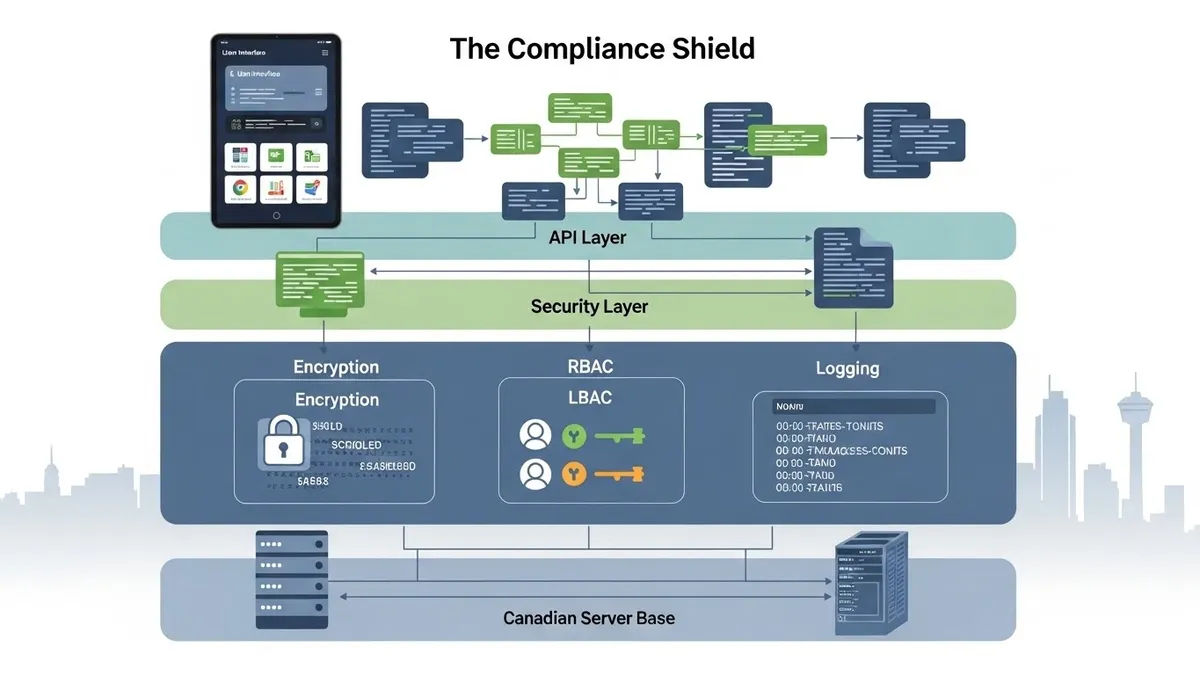
At Fantech Labs, we treat compliance as a foundational architecture feature, not a plugin. Here is how we translate technical security into business safety:
🛡️ 1. Data Sovereignty (Canadian Hosting)
The Tech: We deploy strictly on Canadian-based cloud infrastructure (e.g., AWS Canada Central).
The Business Value: ensures patient data never leaves legal jurisdiction, satisfying a primary requirement for Alberta Health Services (AHS) integration and PIA approval.
🔐 2. Encryption at Rest & In-Transit
The Tech: We utilize AES-256 encryption for database storage and TLS 1.3 for data transmission.
The Business Value: If a device is stolen or a network intercepted, the patient data remains unreadable. This drastically reduces liability in the event of a physical security breach.
👁️ 3. Granular Role-Based Access Control (RBAC)
The Tech: We engineer strict permission levels. A receptionist sees scheduling; a doctor sees clinical notes; an admin sees usage stats.
The Business Value: Prevents internal snooping and "accidental" data leaks. This is a critical component of the audit trails required by HIA auditors.
📹 4. Secure WebRTC for Telehealth
The Tech: Peer-to-peer, encrypted video channels that do not store recording data on intermediary servers.
The Business Value: Allows for high-definition virtual care without creating a massive, risky database of recorded patient consultations.
⚠️ Mid-Content Check: Is Your Architecture PIA-Ready?
Unsure if your current app concept meets Alberta’s privacy standards? Don't wait for a rejection letter.
👉 Get a Free Architecture Audit A confidential review of your compliance readiness by Calgary-based architects.
Real World Application: Geviti
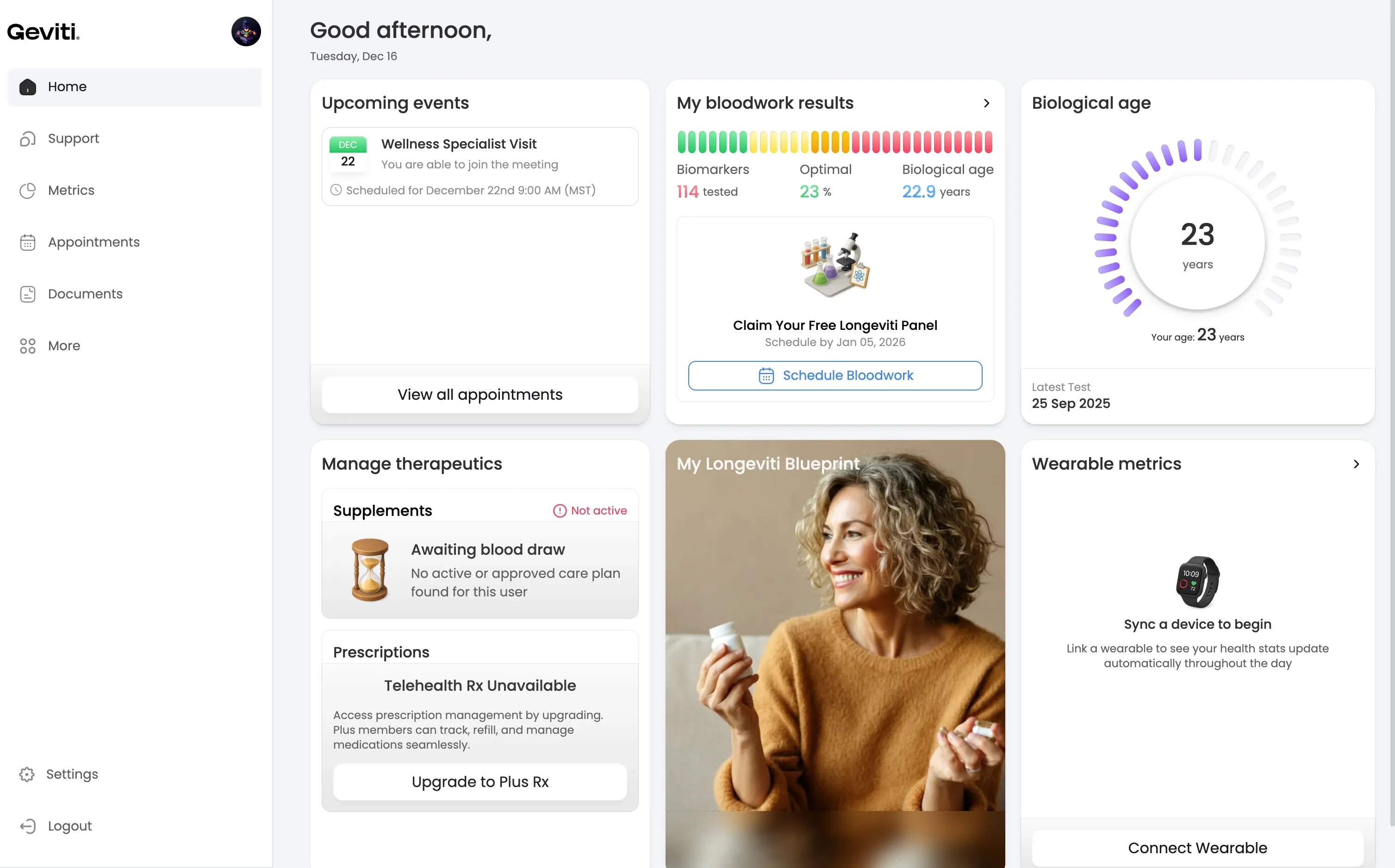
The Vision: Geviti wasn't just building a healthcare app; they wanted a complete ecosystem. Their goal was to move healthcare from reactive to proactive, allowing users to monitor vital signs via smart devices, access lab results, and chat with care teams in real-time.
The Challenge: The complexity was immense. The system needed to ingest data from wearables (Garmin, Apple, Samsung), sync with lab APIs for blood results, and allow secure communication—all while maintaining strict compliance across Web, iOS, and Android platforms.
The Fantech Solution: We acted as the strategic partner from concept to launch.
- Unified Ecosystem: We built native iOS and Android apps synchronized with a robust web portal for care providers.
- Wearable Integration: We developed secure APIs to pull biometric data (heart rate, sleep, steps) directly into the patient’s medical history.
- Security First: We implemented end-to-end encryption for the in-app chat system, ensuring that conversations between patients and doctors remained private and legally protected.
The Strategic Outcome: Geviti launched as a fully scalable, secure platform. Users could manage appointments, view comprehensive biomarkers, and receive subscription-based care without exposing the company to regulatory risk. The architecture supports rapid scaling without breaking compliance protocols.
The Risk of Cheap vs Custom Medical Software Development
We often see Calgary businesses try to cut costs by hiring offshore teams or using generic app builders. Here is the reality of that approach:
- Zero Legal Accountability: If an offshore team leaks data, you have no legal recourse. You are solely responsible for the fine.
- PIA Failure: Without detailed technical documentation on data flows (which cheap agencies rarely provide), you cannot pass a Privacy Impact Assessment.
- Hidden Costs: Rebuilding a non-compliant app costs 3x more than building it right the first time.
Why Fantech Labs? (Your Local Strategic Partner)
We are not just coders; we are strategic consultants. We understand the landscape of medical app development in Calgary. We know what the OIPC looks for, we understand the anxieties of AHS integration, and we know that your reputation is your most valuable asset.
We build software that allows you to sleep at night, knowing your patient data is locked down and your business is audit-proof.
Conclusion: Build Safety Into Your Roadmap
The demand for telehealth and remote monitoring in Alberta is exploding. But the winners in this space won't just be the ones with the best features—they will be the ones with the most trusted platforms.
Don't gamble with patient privacy. Build a foundation that supports growth, not lawsuits.
🚀 Ready to de-risk your medical platform? Let’s discuss your roadmap, compliance needs, and technical architecture.
👉 Book Your Confidential Strategy Session
FAQ
Q: What is the typical telehealth app cost in Alberta?
A: A custom, compliant MVP usually ranges between $40,000 and $100,000 CAD. This variation depends on complexities like wearable integration, EMR connectivity, and the rigorous testing required for HIA compliance.
Q: Do I need a Privacy Impact Assessment (PIA) for my app?
A: Yes. If you are a custodian of health information in Alberta (or working on behalf of one), you must submit a PIA to the OIPC before rolling out any new technology that collects patient data.
Q: Can you integrate my app with existing EMR systems?
A: Yes. We build secure API bridges using standards like HL7 and FHIR to connect your mobile app with established Electronic Medical Records, ensuring data flows smoothly without compromising security.
Author Bio
Tayyad Ali: Senior Technical Architect A specialized software strategist at Fantech Labs. Focused on building high-security, HIA-compliant digital infrastructure for Alberta’s healthcare and med-tech sectors. Expert in data sovereignty and risk-mitigation architecture.