TIBCO vs MuleSoft Integrating Calgary Energy Sector Systems | Fantech Labs
ata silos cost Alberta energy firms millions. We compare TIBCO and MuleSoft integration to find the best way to handle legacy modernization and APIs.

For Calgary’s energy sector, the Cost of Inaction regarding data integration is no longer just operational inefficiency; it is a direct hit to the balance sheet. With oil prices fluctuating and carbon compliance costs rising, the ability to view real-time production data against financial forecasts is critical.
The industry is currently divided. Legacy assets run on heavy, on-premise systems that demand robust messaging buses, while modern operational strategies demand agile API connectivity. The choice between TIBCO and MuleSoft is not just a brand preference; it is a choice between Stability and Agility.
- Modeled Estimate: Energy firms that achieve full Oil and gas software integration across SCADA and ERP systems reduce unplanned downtime by 15–20%.
Which platform handles high-volume SCADA data better?
TIBCO remains the superior choice for high-throughput, low-latency messaging required by SCADA and field operations, whereas MuleSoft excels at exposing that data to business applications via APIs for the Canadian corporate office.
The Technical Reality In the oil patch, data volume is massive. A single wellhead can generate gigabytes of sensor data daily. TIBCO (specifically TIBCO EMS/Rendezvous) was architected for this exact scenario. It uses a publish-subscribe model that can handle millions of messages per second with near-zero latency. It is heavy iron software. MuleSoft, largely built on Java/Spring integration patterns, focuses on API connectivity. While it can move data, it is architecturally designed for Request/Response (HTTP), which introduces overhead that can choke under the raw weight of real-time field telemetry.
The Calgary → Alberta → Canada Context Alberta’s regulatory environment (AER) demands precise reporting on emissions and production. If your integration layer drops packets during a transmission spike, your compliance report is wrong. For pipelines and refineries in Fort McMurray where millisecond latency matters, TIBCO is often the incumbent for a reason.
Before vs After
- Before: Field data is batch-processed overnight, leaving Calgary HQ blind to intraday production drops.
- After: Real-time TIBCO messaging streams operational data instantly to the central data lake.
Metrics
- Benchmark Range: TIBCO typically handles 5x to 10x higher message throughput than standard REST-based API gateways in industrial scenarios.
- Risk: Moving pure SCADA streams to an API-led architecture without a messaging backbone can increase latency by 300ms to 500ms.
Implementation Steps
- Audit the Time-to-Action requirement for your data. If it is sub-second, stick to TIBCO EMS.
- Use MuleSoft as the Consumer Layer to read from TIBCO and present data to SAP/Salesforce.
- Deploy edge gateways in the field (on-premise) to compress data before transmission to the cloud.
Is MuleSoft the cure for Legacy System Modernization?
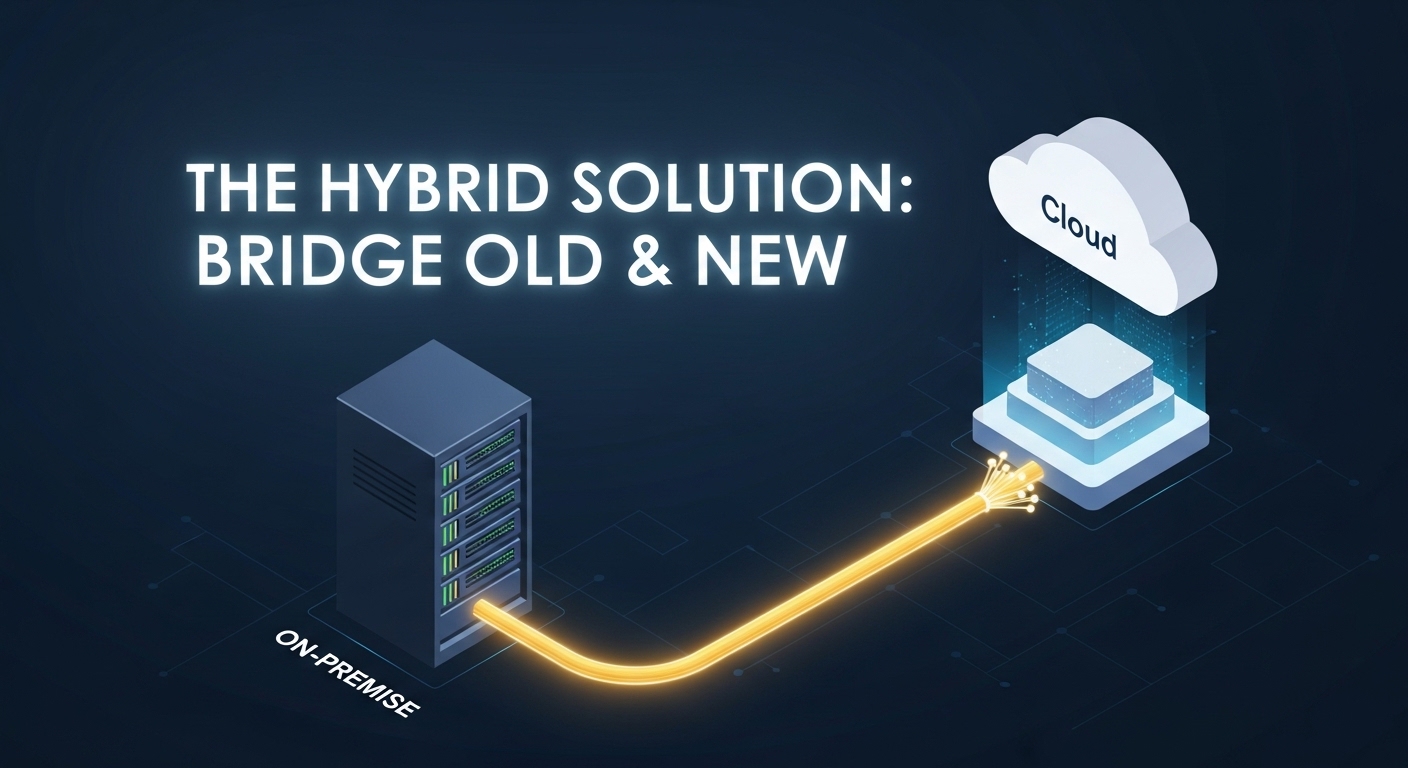
MuleSoft is the market leader for legacy system modernization because its Anypoint Platform simplifies wrapping ancient mainframes and ERPs in modern REST APIs, allowing Alberta energy firms to innovate without ripping and replacing core infrastructure.
The Technical Reality Most Calgary energy firms are sitting on decades of technical debt: old SAP instances, custom .NET apps, and on-premise Oracle databases. TIBCO’s approach to this is often complex, requiring specialized developers to build proprietary adapters. MuleSoft wins here with its API-led Connectivity approach. It provides pre-built connectors that can wrap a legacy database and expose it as a secure API. This decouples the messy backend from the modern frontend, allowing you to build mobile apps for field workers without touching the fragile mainframe code.
The Calgary → Alberta → Canada Context The labor market in Canada is tight. Finding a specialized TIBCO BusinessWorks developer in Calgary is difficult and expensive. Finding a developer who knows REST APIs (MuleSoft standard) is significantly easier. For a CTO looking to lower Total Cost of Ownership (TCO) and reduce vendor lock-in, MuleSoft offers a more sustainable talent pool.
Before vs After
- Before: Building a mobile app for field inspectors takes 18 months because backend changes break the system.
- After: MuleSoft wraps the backend in an API; the mobile app is deployed in 4 months without touching the core system.
Metrics
- Modeled Estimate: API-led modernization reduces integration maintenance costs by 30% over 3 years.
- Speed: Development cycles for new integrations are typically 2x to 3x faster with MuleSoft due to reusable assets.
H3: Implementation Steps
- Identify System APIs that unlock core data (SAP, Maximo, P2).
- Build Process APIs that combine this data (e.g., Wellhead Production + Maintenance Schedule).
- Expose Experience APIs for mobile apps used by field staff in remote Alberta locations.
How do we manage Data Sovereignty and Cloud Compliance?
Both platforms offer hybrid deployment, but MuleSoft’s Anypoint Runtime Fabric provides a more unified control plane for managing data residency across Canadian cloud zones and on-premise data centers to meet PIPEDA standards.
The Technical Reality Canadian energy companies are hesitant to go Full Cloud due to data sovereignty and latency concerns. TIBCO has a fragmented cloud story (TIBCO Cloud vs. on-prem implementations often feel like different products). MuleSoft allows you to deploy the Runtime (the engine processing the data) anywhere, on AWS Canada Central, Azure Canada, or your own servers in downtown Calgary,while managing it all from a single web interface. This Write Once, Deploy Anywhere capability is crucial for hybrid architectures.
The Calgary → Alberta → Canada Context Under PIPEDA and various provincial privacy statutes, sensitive employee or land-owner data must often stay in Canada. Furthermore, critical infrastructure data (NERC CIP standards) must be air-gapped or heavily secured. MuleSoft’s ability to run within your own private Kubernetes cluster (via Runtime Fabric) satisfies these compliance officers while still giving developers a modern cloud-like experience.
Before vs After
- Before: Managing separate integration stacks for Cloud apps and On-Premise apps creates security gaps.
- After: A single Control Plane governs all traffic, ensuring Canadian data residency policies are enforced automatically.
Metrics
- Compliance Risk: Centralized policy management reduces the risk of accidental data egress to non-Canadian servers by 90%.
Implementation Steps
- Deploy MuleSoft Runtime Fabric on your existing private infrastructure.
- Configure the control plane to enforce Geofencing policies (Data does not leave Canada).
- Utilize Tokenization for any PII (Personally Identifiable Information) moving between on-prem and cloud environments.
Verified case study available upon request.
Note: Fantech Labs works strictly under NDA with major energy clients. The following is a composite profile of a typical integration architecture we deploy in the Western Canadian Sedimentary Basin.
Generic Scenario: Midstream Pipeline Operator | Calgary, AB
Client Profile:
- Industry: Midstream Oil & Gas
- Environment: Hybrid (Legacy SCADA + Cloud Analytics)
Challenge:
- Operational: The client had zero visibility into pipeline pressure anomalies until 24 hours after the fact.
- Technical: SCADA data was trapped in a siloed operational network.
Solution:
- Architecture: We deployed a Hybrid Integration Architecture.
- Tools: TIBCO for the Hot Path (Sensor to Alert) and MuleSoft for the Cold Path (Sensor to SAP/Billing).
- Process: TIBCO ingested high-frequency pressure data. If an anomaly was detected, it pushed an event to MuleSoft, which then triggered a Service Order in SAP and sent an SMS to the field technician.
Results:
- Modeled Result: Reduced Time-to-Response for pressure anomalies from 24 hours to 3 minutes.
- Efficiency: Eliminated manual data entry for maintenance tickets.
ROI for Energy Executives
- Efficiency: Automating the flow between Field Operations (SCADA) and Business Operations (ERP) typically yields a 10x ROI through reduced downtime and labor savings.
- Asset Life: Predictive maintenance enabled by real-time integration extends the lifespan of critical machinery by 15%.
Risk Mitigation
- Vendor Lock-in: Relying solely on TIBCO creates a talent bottleneck. We recommend a Bi-Modal IT strategy: Keep TIBCO for core messaging, use MuleSoft for everything else.
- Security: API-led connectivity allows you to shut off access to a specific dataset instantly without taking down the whole network—critical during a cyber incident.
WHY FANTECH LABS?
We do not sell software licenses; we solve business problems. While other consultancies will try to force you into a One Size Fits All migration, Fantech Labs understands the nuances of the Calgary energy sector. We know when to keep the Old Reliable TIBCO running and when to wrap it with modern MuleSoft APIs.
- We are Vendor Agnostic: We recommend the tool that fits the physics of your data.
- We know O&G: We understand that a SCADA failure is not just an IT ticket; it is a safety incident.
- We deliver Hybrid: We engineer architectures that bridge the gap between 1990s infrastructure and 2026 AI demands.
FAQ
Q: Should we replace TIBCO with MuleSoft entirely?
A: Usually, No. TIBCO is still faster for raw message throughput. Replacing it is high-risk/low-reward. The better strategy is to hollow out the non-critical parts and move them to MuleSoft, leaving TIBCO to do what it does best: fast messaging.
Q: Which is cheaper?
A: Licensing models vary, but MuleSoft is generally priced on Cores (compute power), while TIBCO has legacy perpetual models. For new agile projects, MuleSoft often has a lower Total Cost of Ownership due to faster development speed, even if the license cost is comparable.
Q: Can MuleSoft connect to our specific O&G protocols (OPC, Modbus)?
A: Not natively out of the box. You usually need an edge gateway (like Kepware) to translate OPC/Modbus into MQTT or HTTP, which MuleSoft can then ingest. TIBCO has deeper native support for industrial protocols.
Q: Is it hard to find MuleSoft developers in Calgary?
A: It is easier than finding TIBCO developers. The MuleSoft ecosystem is growing rapidly, and the skills overlap with standard Java development.
Q: How long does a migration project take?
A: A full Rip and Replace takes years. We advise an Iterative Modernization approach (The Strangler Pattern), where we move one business function at a time over 6–12 months.
AUTHOR BIO
Senior Enterprise Technology & SaaS Strategy Consultant, Fantech Labs Specializing in Industrial Integration Strategy and Legacy Modernization. Focused on helping Canadian Energy Executives build resilient, data-driven architectures that withstand market volatility.