Why Are Most Small Business Owners Failing at AI Integration (And It’s Not What You Think)?
Most small business owners are not failing at AI integration because of technology limitations, they are failing because of misalignment between business goals, data readiness, and implementation strategy. AI is often treated as a tool to “add on,” rather than a system that requires process redesign, clear use cases, and structured data workflows.
This topic is critical for Canadian small and mid-sized businesses (SMBs) in industries like retail, healthcare, fintech, and SaaS that are trying to adopt AI-driven automation, machine learning, and generative AI tools. The problem it solves is simple: helping businesses understand why their AI initiatives stall, and how to approach integration in a way that actually delivers ROI.
Key Takeaway (Read This First)
- AI integration fails due to strategy gaps, not tool limitations
- Most businesses skip clear use-case definition
- Poor or unstructured data blocks meaningful AI outcomes
- AI requires workflow integration, not isolated experiments
- Success depends on aligning business operations, data, and technology
What Does AI Integration Actually Mean for Small Businesses?
AI integration is not about using tools like chatbots or automation platforms in isolation. It refers to embedding artificial intelligence systems into core business processes such as:
- Customer support automation
- Sales and lead qualification
- Data analysis and forecasting
- Operations and workflow management
Core Technologies Involved
- Machine learning models
- Natural language processing (NLP)
- Generative AI systems (e.g., content generation, copilots)
- API-based integrations with existing software
These technologies are often accessed through platforms developed by companies like OpenAI or Google Cloud, but the challenge is not access, it’s implementation.
Why Do Most AI Initiatives Fail at the SMB Level?
The failure is rarely technical. It’s structural.
1. No Clear Business Use Case
Many businesses adopt AI because of trend pressure rather than operational need.
Common mistake:
- “We need AI” without defining what problem it should solve
What actually works:
- Identifying a specific use case such as:
- Reducing customer response time
- Automating repetitive internal tasks
- Improving lead qualification
Without a clear use case, AI becomes an experiment, not a system.
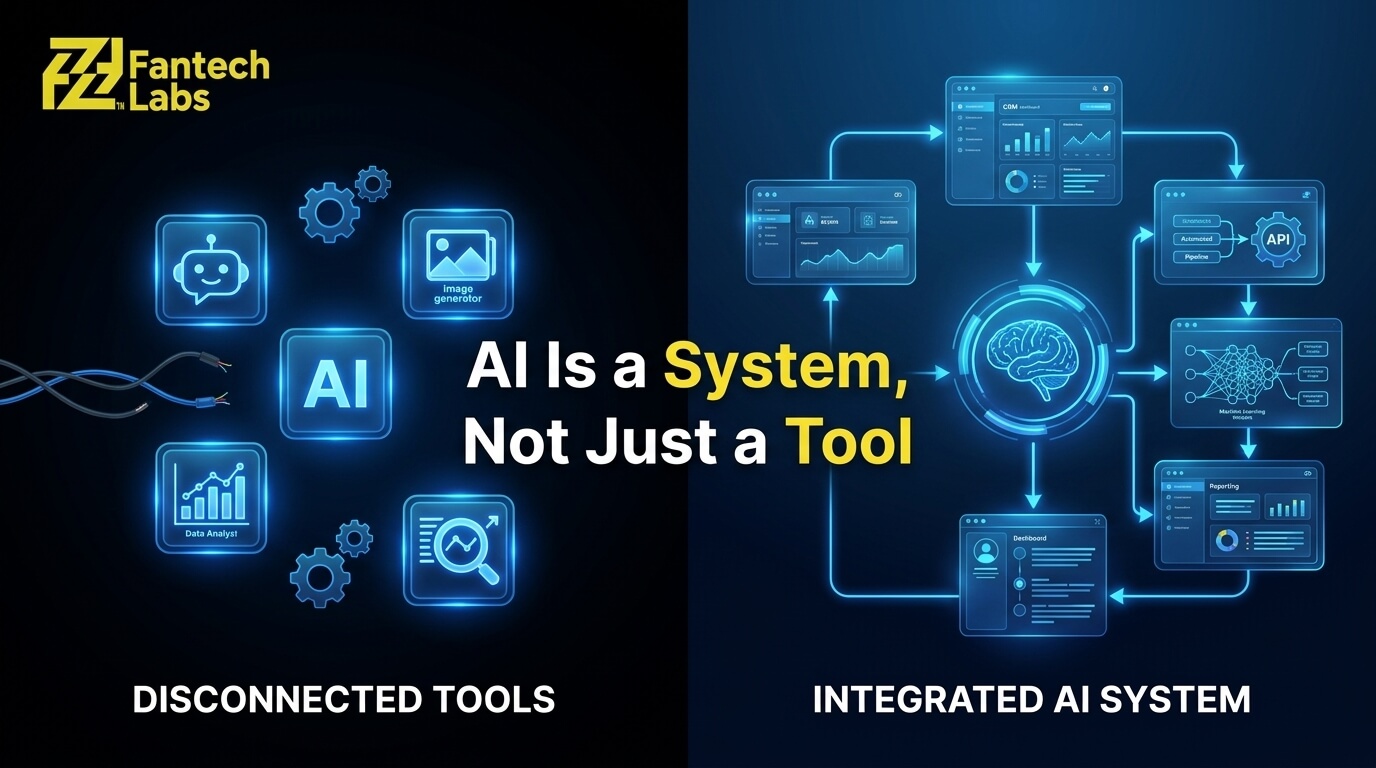
2. Treating AI as a Tool Instead of a System
Small businesses often plug AI into existing workflows without adjusting processes.
The issue:
- AI is layered on top of broken or inefficient workflows
The reality:
AI requires:
- Process redesign
- Workflow restructuring
- Integration across systems
For example, adding an AI chatbot without restructuring customer support workflows usually results in poor performance.
3. Poor Data Quality and Accessibility
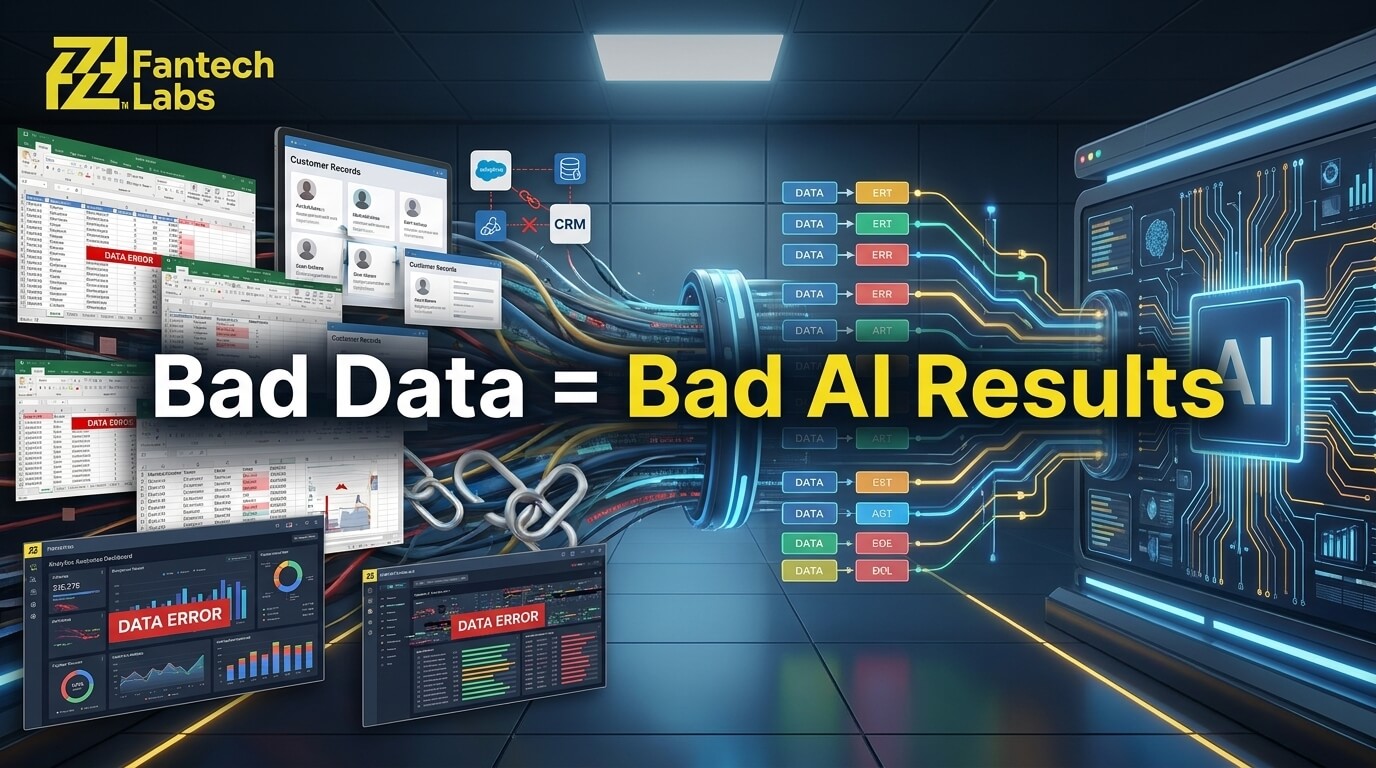
AI systems rely heavily on structured and usable data.
Common challenges:
- Data scattered across tools (CRM, spreadsheets, emails)
- Inconsistent or incomplete records
- Lack of centralized data systems
Without clean data, even the best AI models produce weak outputs.
4. Over-Reliance on No-Code AI Tools
The rise of no-code platforms has made AI more accessible, but also more misunderstood.
The problem:
- Businesses expect plug-and-play results
- No customization for business logic
- Limited integration with internal systems
Result:
AI tools are used superficially, without delivering measurable value.
The Real Gap: Strategy vs Implementation
The biggest issue is not technology, it’s the gap between business strategy and technical execution.
What Businesses Assume
- AI will automatically improve efficiency
- Tools will adapt to existing workflows
What Actually Happens
- AI requires structured inputs
- Implementation takes iteration
- Results depend on integration depth
This gap is where most SMB AI initiatives fail.
Why This Problem Is Growing in Canada’s SMB Market
Canadian small businesses are rapidly adopting AI due to:
- Increased competition
- Pressure to automate operations
- Availability of cloud-based AI platforms
However, adoption is happening faster than understanding.
Result:
- High experimentation
- Low implementation success
- Limited measurable ROI
This creates a cycle where businesses invest in AI tools but fail to integrate them effectively.
What Does a Successful AI Integration Strategy Look Like for Small Businesses?

A successful AI integration strategy is built on clear use cases, structured data, and workflow alignment not just tool adoption. For small businesses, the goal is not to “use AI everywhere,” but to solve specific operational problems with measurable impact.
Start With a Defined Business Objective
Before selecting any AI tool, define the outcome you want.
Examples:
- Reduce customer support response time
- Increase lead conversion rates
- Automate repetitive back-office tasks
A clear objective ensures AI is tied to business value, not experimentation.
Map Existing Workflows Before Adding AI
Most failures happen because AI is added without understanding current processes.
What to do instead:
- Document how tasks currently flow
- Identify bottlenecks and inefficiencies
- Pinpoint where automation or intelligence can help
AI should improve workflows not sit on top of broken ones.
Build a Data Foundation First
AI systems depend on data quality.
Minimum requirements:
- Centralized data storage (CRM, ERP, or unified database)
- Clean and consistent data formats
- Clear data ownership and structure
Without this, AI outputs will be unreliable.
Choose the Right Integration Approach
There are two common paths:
1. Tool-based integration Using platforms with built-in AI features (e.g., CRM automation, chatbots)
2. Custom integration Connecting AI models via APIs into your internal systems
Platforms like Microsoft Azure or Amazon Web Services support deeper integrations, but require technical planning.
Define Success Metrics Early
AI should be measurable.
Track:
- Time saved
- Cost reduction
- Conversion improvements
- Process efficiency gains
Without metrics, it’s impossible to evaluate impact.
What Are the Most Effective AI Use Cases for SMBs?
Instead of broad adoption, focus on high-impact, practical use cases.
Customer Support Automation
AI can handle:
- Frequently asked questions
- Ticket routing
- First-response automation
Outcome: Reduced response time and support workload.
Sales and Lead Qualification
AI helps:
- Score leads
- Automate follow-ups
- Analyze customer behavior
Outcome: Improved conversion efficiency.
Internal Process Automation
Use AI for:
- Data entry automation
- Document processing
- Workflow triggers
Outcome: Reduced manual workload and fewer errors.
Data Analysis and Forecasting
AI systems can:
- Identify trends
- Predict demand
- Support decision-making
Outcome: Better planning and resource allocation.
Why More AI Tools Is Not the Solution
Many businesses respond to poor results by adding more tools.
The Problem With Tool Overload
- Fragmented workflows
- Data silos
- Increased complexity
- No clear ownership
More tools often create more inefficiency.
The Better Approach
Focus on:
- Fewer tools
- Deeper integration
- Clear system ownership
AI works best when it is part of a connected ecosystem, not a collection of isolated tools.
How Software Development Plays a Critical Role in AI Integration
AI integration is not just a business decision it is a software architecture challenge.
Why Off-the-Shelf Tools Fall Short
Pre-built tools often:
- Lack customization
- Do not fit unique workflows
- Limit scalability
Role of Custom Development
Custom software enables:
- API integrations between systems
- Tailored automation logic
- Scalable AI workflows
This is where software development teams bridge the gap between AI capability and business execution.
Integration Layer Matters
A strong integration layer connects:
- CRM systems
- Internal databases
- AI models
- Customer-facing applications
Without this layer, AI remains disconnected from real operations.
What Changes When AI Is Implemented Correctly?
When AI integration is done properly, the impact is operational—not just technical.
Observable Outcomes
- Faster execution of repetitive tasks
- More accurate data-driven decisions
- Improved customer experience
- Better use of internal resources
Strategic Shift
Businesses move from:
- Reactive operations
To:
- Predictive and automated workflows
What Are the Most Common AI Integration Mistakes Small Businesses Make?
Most AI failures at the SMB level are predictable. They stem from execution gaps, unrealistic expectations, and weak technical planning, not from the technology itself.
Mistake 1: Starting Without a Technical Architecture Plan
Many businesses jump into AI without defining how systems will connect.
What happens:
- AI tools operate in isolation
- No data flow between systems
- Limited scalability
What to do instead:
- Define system architecture early
- Identify how AI will connect with CRM, databases, and internal tools
- Plan integration points before implementation
Mistake 2: Ignoring Data Readiness
AI is only as effective as the data it uses.
Common issues:
- Duplicate or inconsistent records
- Missing historical data
- No centralized data system
Impact:
- Poor AI outputs
- Incorrect predictions
- Low trust in the system
Mistake 3: Expecting Immediate ROI
AI is often treated as a quick win.
Reality:
- Requires testing and iteration
- Needs continuous improvement
- ROI builds over time
Businesses that expect instant results often abandon AI too early.
Mistake 4: Lack of Internal Ownership
AI initiatives fail when no one is responsible for them.
Symptoms:
- No clear accountability
- Poor maintenance
- Inconsistent usage across teams
Solution:
- Assign ownership (technical + operational)
- Define roles for monitoring and optimization
Mistake 5: Not Aligning AI With Business Processes
AI should enhance workflows that do not exist separately.
Problem:
- AI tools are used independently
- No connection to daily operations
Result:
- Minimal business impact
How Should SMBs Approach AI Integration Step-by-Step?
A structured approach increases the chances of success.
Step 1: Identify a High-Impact Use Case
Start with one clear problem.
Examples:
- Automating customer support responses
- Improving lead qualification
- Reducing manual data entry
Avoid trying to solve multiple problems at once.
Step 2: Audit Existing Systems and Data
Evaluate:
- Where your data lives
- How systems interact
- Where inefficiencies exist
This helps define integration requirements.
Step 3: Design the Integration Workflow
Map how AI will function within your operations.
Define:
- Input sources (CRM, forms, databases)
- Processing logic (AI model behavior)
- Output actions (automation, alerts, decisions)
Step 4: Choose the Right Technology Stack
Select tools based on your needs not trends.
This may include:
- Cloud platforms like Google Cloud
- AI APIs from providers like OpenAI
- Integration tools and middleware
Step 5: Implement and Test in Phases
Avoid full-scale rollout.
Instead:
- Start with a pilot
- Test outputs and workflows
- Refine based on results
Step 6: Monitor and Optimize Continuously
AI systems require ongoing improvement.
Track:
- Performance metrics
- Accuracy of outputs
- Business impact
Refine models and workflows regularly.
What Role Do Teams and Skills Play in AI Success?
AI integration is not just technical, it’s organizational.
Cross-Functional Collaboration
Successful AI projects involve:
- Business decision-makers
- Technical developers
- Operations teams
This ensures alignment between strategy and execution.
Skill Gaps in SMBs
Many small businesses lack:
- Data engineering expertise
- AI/ML understanding
- Integration capabilities
This is why external software development support is often required.
Importance of Technical Leadership
Even small AI projects need:
- Clear technical direction
- Defined architecture decisions
- Ongoing system oversight
Without this, projects lose structure quickly.
How Does AI Integration Impact Long-Term Business Growth?

AI is not just an efficiency tool, it changes how businesses operate.
From Manual to Automated Operations
- Repetitive tasks become automated
- Teams focus on higher-value work
From Reactive to Predictive Decision-Making
AI enables:
- Data-driven forecasting
- Early identification of trends
From Fragmented Systems to Connected Ecosystems
Well-integrated AI connects:
- Customer data
- Internal processes
- Decision-making systems
Competitive Advantage
Businesses that integrate AI effectively gain:
- Faster execution
- Better customer experience
- Improved operational efficiency
Frequently Asked Questions About AI Integration for Small Businesses
Why do most small businesses struggle with AI implementation?
Most small businesses struggle because they focus on tools instead of strategy. Without clear use cases, structured data, and workflow integration, AI tools remain underutilized and fail to deliver measurable results.
Do small businesses need custom software for AI integration?
Not always, but in many cases, custom software or tailored integrations are required to connect AI systems with existing workflows, CRMs, and internal tools. Off-the-shelf solutions work best for simple use cases but often lack scalability.
How long does it take to see results from AI integration?
AI integration is not immediate. Initial improvements may appear quickly in simple automation tasks, but meaningful ROI typically requires:
- Iteration
- Data refinement
- Workflow optimization
Is AI integration expensive for SMBs?
Costs vary depending on complexity. Many cloud platforms offer scalable pricing, but the real investment is in:
- Proper implementation
- Data preparation
- Integration development
Poor implementation often leads to wasted spending.
What industries benefit most from AI integration?
AI is widely applicable across:
- Retail (customer experience, demand forecasting)
- Healthcare (data processing, patient workflows)
- Finance (risk analysis, automation)
- SaaS (customer support, analytics, onboarding)
The key factor is not the industry, it’s how well AI is aligned with business operations.
Final Insight: Why AI Integration Is a Business Problem, Not a Technology Problem
The core reason small businesses fail at AI integration is simple: they treat it as a tool upgrade instead of a system transformation.
AI does not fix broken processes. It amplifies them.
What Successful Businesses Do Differently
- Start with a clear business objective
- Build a structured data foundation
- Integrate AI into workflows, not around them
- Measure outcomes and iterate continuously
What Failing Implementations Have in Common
- No defined use case
- Poor data quality
- Disconnected tools
- Lack of ownership and accountability
Conclusion: How Should Canadian SMBs Approach AI in 2026 and Beyond?
AI integration is no longer optional for small businesses, it is becoming a core operational capability. However, success depends on how it is approached.
For Canadian SMBs, the focus should be on:
- Solving specific operational problems
- Building connected systems instead of isolated tools
- Investing in integration, not just adoption
Strategic takeaway:
AI delivers value when it is:
- Integrated into daily operations
- Supported by clean and accessible data
- Managed as an evolving system
Businesses that understand this shift will move beyond experimentation and begin to see real, measurable outcomes from AI.
About the Author
Written by Ali Raza, Lead Enterprise Architect & Integration Specialist at Fantech Labs. Ali specializes in helping Canadian B2B companies and SMBs bridge the gap between business strategy and technical execution. With deep expertise in Salesforce architecture, workflow automation, and AI system integration, he transforms disconnected tools into unified, high-performance digital ecosystems that drive measurable ROI.