
Why Most Indie App Developers Struggle to Scale and What to Do Instead
Most indie app developers struggle to scale because they build for speed, not for long-term growth. While this approach works in the early stages, it often leads to performance issues, unstable architecture, and limitations that prevent the app from growing into a reliable product.
Indie developers are excellent at launching quickly. In the early stage, speed is everything. You launch fast, test quickly, and improve based on feedback.
But as your app grows, that same speed-first approach starts working against you.
What works for 100 users won’t work for 10,000.
This is where most indie apps hit a wall:
- performance drops
- bugs increase
- development slows down
And suddenly, growth becomes a problem instead of progress.
What Is an Indie App Developer and How Do They Work?

An indie app developer is typically an individual or small team that designs, builds, and launches applications independently without the support of a large organization.
Their workflow usually focuses on:
- rapid development
- minimal viable product (MVP) launches
- quick iterations based on user feedback
- low-cost tools and frameworks
This approach is highly effective for getting a product into the market quickly.
👉 Insight: Indie developers optimize for speed and experimentation, not long-term system stability.
Why Indie Development Works So Well in the Early Stage
The early success of many apps is driven by the strengths of indie development.
These include:
Fast Execution
No longer processes. Decisions are made instantly, and features are shipped without delays.
Low Initial Cost
With limited resources, indie developers focus on building only what is necessary. This keeps costs low and resources under control.
High Ownership
Indie developers are deeply involved in every aspect of the product, which leads to faster iteration cycles.
Flexible Technology Choices
They often choose tools that allow quick development rather than long-term scalability.
👉 Insight: These advantages are exactly what help indie apps launch, but they can later become constraints.
Where the Problem Begins: Growth Without Structure

As your app grows, the system requirements change.
You move from:
- a few users
- simple workflows
- limited data
To:
- growing user load
- complex features
- real-time processing
- third-party integrations
This is where cracks begin to show.
Common signs:
- slow performance
- bugs under load
- difficulty adding features
- unstable backend
👉 Most indie apps aren’t built to handle this shift.
The Core Issue: Built Fast, Not to Scale
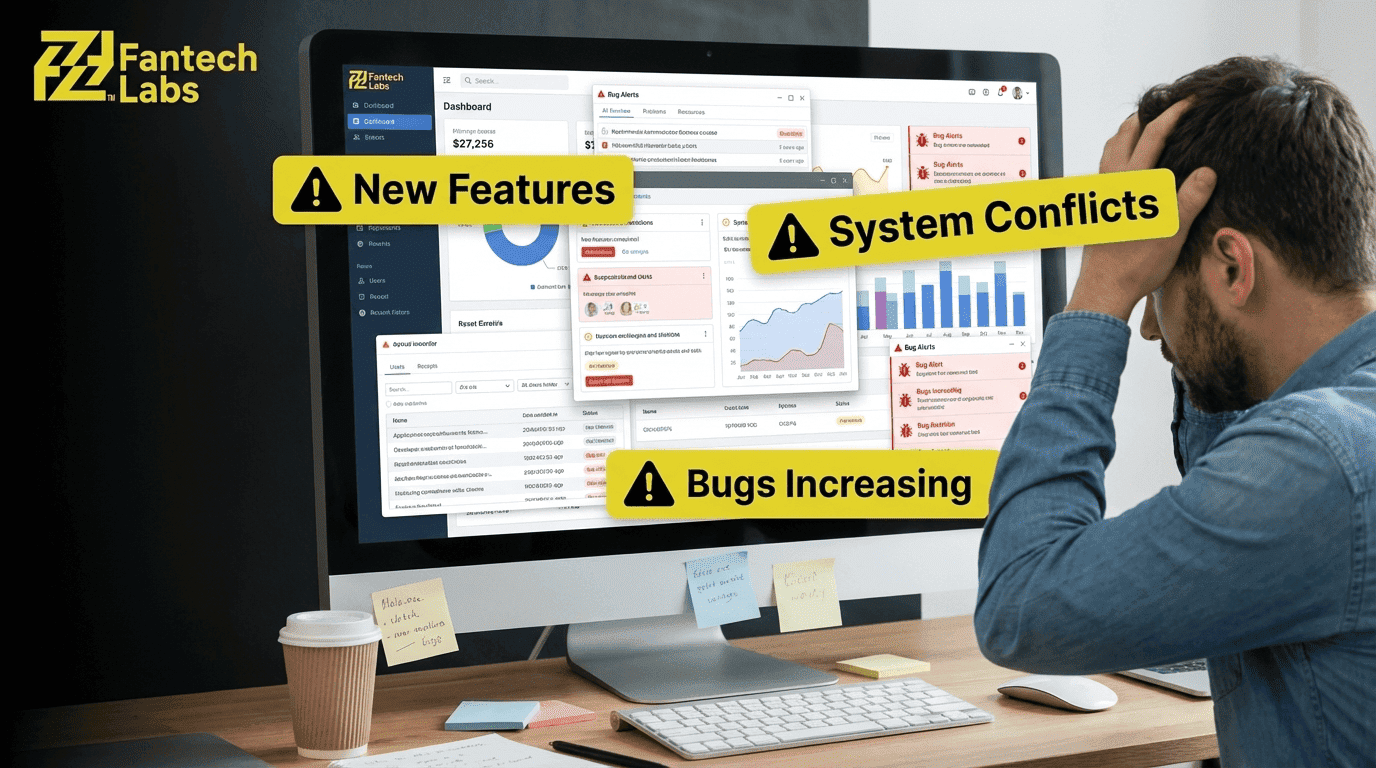
Most indie-built applications are designed to launch, not to grow.
This creates a gap between:
👉 what the app was built for and 👉 What the app now needs to handle
This gap is where scaling problems begin.
What This Means for Growing Apps
If an app continues to grow without addressing these structural issues, it eventually reaches a point where:
- updates become risky
- performance issues increase
- user experience declines
- growth slows down
At this stage, incremental fixes are no longer enough.
The product needs a more structured engineering approach.
Early Signal Most Developers Ignore
One of the most common mistakes is assuming that small fixes will solve scaling issues.
In reality:
👉 scaling problems are rarely surface-level 👉 they are usually architectural
Ignoring this often leads to higher costs and more complex rebuilds later.
Strategic Insight
Indie development is not the problem.
The problem is staying in indie mode when the product has outgrown it.
If you’ve already built an app and are starting to experience performance issues, slow updates, or scaling limitations, it may not be a coding problem; it may be an architecture problem.
Understanding when to transition from a fast-built product to a scalable system is one of the most critical decisions in app growth.
When Should Indie App Developers Upgrade Their Architecture?

Indie app developers should consider upgrading their architecture when the product starts showing signs that growth is outpacing its technical foundation. This typically happens when maintaining the app becomes harder than building new features.
In simple terms:
👉 If your app is slowing you down instead of helping you grow, it is time to rethink the system.
Clear Signals That It Is Time to Upgrade

Scaling problems usually don’t appear all at once. They show up as small friction points that gradually become bigger issues.
1. Feature Development Becomes Slower
In the early stages, adding features is fast and straightforward.
Over time, you may notice:
- Small changes take longer to implement
- fixing one issue creates another
- testing becomes more complex
👉 This indicates poor structure.
2. Performance Issues Increase With Usage
As user activity grows, the system may struggle to keep up.
Common signs include:
- slow API responses
- delays in data processing
- inconsistent app behavior
👉 This usually points to scalability limitations in the backend or database design.
3. Frequent Bugs and Instability
If bugs become more frequent and harder to fix, it often means the system has become tightly coupled.
This results in:
- unpredictable errors
- difficulty isolating problems
- increased maintenance effort
4. Difficulty Integrating New Tools or Services
Modern apps rely on integrations for payments, analytics, communication, and more.
If adding integrations feels complicated or unstable, it suggests:
- lack of a clean API layer
- poor system separation
5. Growing Dependency on Workarounds
Temporary fixes are common in early-stage apps. However, when these workarounds become the default approach, they start limiting growth.
Examples include:
- patching performance issues instead of fixing root causes
- adding duplicate logic to avoid breaking existing code
- relying on manual processes instead of automation
👉 Insight: Too many workarounds signal structural issues, not isolated problems.
A Simple Decision Framework
To evaluate whether your app needs an upgrade, ask the following:
- Can new features be added without breaking existing functionality?
- Does the system handle increasing users without performance issues?
- Are bugs manageable and predictable?
- Is development speed improving or declining?
If most answers are negative, your system likely needs restructuring.
Indie Approach vs Scalable Architecture
Understanding the difference between early-stage builds and scalable systems is critical.
Indie Approach
- built for speed
- minimal structure
- tightly coupled components
- limited scalability planning
Scalable Architecture
- modular design
- clear separation of services
- optimized data flow
- built for growth and flexibility
👉 Insight: Both approaches are valid, but at different stages of the product lifecycle.
What Happens If You Delay the Upgrade
Many developers delay restructuring because the system still “works.”
However, over time:
- technical debt increases
- performance issues worsen
- development becomes slower
- costs of fixing problems rise
Eventually, the system may require a complete rebuild instead of gradual improvement.
Strategic Perspective
Upgrading your architecture is not about replacing everything. It is about creating a system that supports future growth.
This can include:
- redesigning backend systems
- improving database structure
- introducing modular services
- optimizing performance layers
If your app has reached a stage where growth is creating friction instead of progress, it may be time to transition from an indie-built system to a structured engineering approach.
A properly designed architecture allows you to:
- scale without instability
- release features faster
- maintain long-term product reliability
Teams that specialize in scaling applications can help identify limitations, restructure systems, and prepare your product for sustained growth.
What Is the Right Way to Scale an Indie-Built App?

The right way to scale an indie-built application is to transition from a fast-built structure to a planned, modular, and scalable system architecture. This does not always mean rebuilding everything from scratch. It means identifying bottlenecks, restructuring critical components, and preparing the system for long-term growth.
Scaling properly is not about adding more code. It is about improving how the system is designed to handle complexity.
The Practical Approach to Scaling
A structured scaling approach typically involves three stages.
1. System Audit and Bottleneck Identification
Before making changes, it is essential to understand what is actually causing limitations.
This includes:
- reviewing backend architecture
- analyzing database performance
- identifying slow processes and failure points
The goal is to move beyond assumptions and identify root causes.
2. Architecture Restructuring
Once the issues are clear, the system needs to be redesigned for scalability.
This may involve:
- breaking monolithic systems into modular components
- introducing API layers for better integration
- optimizing data flow and storage
The focus is on making the system flexible, not just fixing individual problems.
3. Performance Optimization and Automation
After restructuring, performance improvements and automation become more effective.
This includes:
- improving response times
- implementing caching strategies
- automating repetitive processes
At this stage, the system is better prepared to handle growth without constant intervention.
👉 Insight: Scaling works best when it is treated as a system-level improvement, not a series of quick fixes.
Why This Matters (ROI Perspective)
If You Scale Properly:
- handle more users without issues
- release features faster
- reduce long-term costs
- improve user experience
If You Don’t:
- recurring performance problems
- higher development costs
- slower growth
- potential user loss
👉 The longer you wait, the more expensive it gets.
Final Takeaway
Indie development is one of the fastest ways to launch an idea.
But growth changes everything.
Scaling is not a failure of your system, it’s the next stage of it.
The key is recognizing when your system needs to evolve.
If your app is already showing:
- performance issues
- slow updates
- instability
👉 It’s time to step back and fix the foundation.
Because at scale…
Speed without structure becomes your biggest bottleneck.
Frequently Asked Questions
What is the biggest challenge for indie app developers when scaling?
The biggest challenge is transitioning from a fast-built system to a structured architecture that supports growth without introducing instability.
Do all indie apps need to be rebuilt to scale?
No. Many can scale with targeted restructuring, but some require bigger changes depending on how they were built.
When should I consider restructuring my app?
When performance drops, bugs increase, or development slows down, those are clear signals.
Can scaling be done gradually?
Yes. A phased approach is often more effective, allowing improvements without disrupting the entire product.
Is scaling only a technical problem?
No. It also involves process improvements, better system design, and long-term planning.