
Key Takeaways
- AI automation helps small businesses reduce manual work, improve response times, and increase operational efficiency.
- Calgary businesses are using AI tools for customer support, lead management, scheduling, invoicing, and marketing automation.
- Small companies can implement automation without building large internal tech teams.
- The strongest ROI often comes from automating repetitive daily workflows.
- AI adoption is becoming a competitive advantage for Canadian small businesses across retail, healthcare, construction, real estate, and professional services.
What Is AI Automation for Small Businesses?
AI automation refers to using artificial intelligence tools and workflow systems to handle repetitive business tasks with minimal manual effort.
For small businesses in Calgary, automation is no longer limited to enterprise companies with large technology budgets. Modern AI platforms now allow smaller organizations to automate customer communication, operations, lead handling, appointment scheduling, and reporting without hiring large teams.
Instead of manually managing every process, businesses can use AI systems to:
- Respond to customer inquiries
- Organize leads automatically
- Schedule appointments
- Generate reports
- Manage internal workflows
- Improve customer service speed
- Reduce repetitive administrative work
The goal is not replacing business owners or employees. The goal is improving efficiency so teams can focus on higher-value work.
Why Calgary Small Businesses Are Investing in AI Automation
Small businesses across Calgary are dealing with increasing operational pressure.
Many companies face challenges such as:
- Rising labor costs
- Slower response times
- Missed leads
- Administrative overload
- Customer service delays
- Inefficient manual workflows
At the same time, customers increasingly expect faster communication and smoother digital experiences.
This has created strong demand for practical AI automation solutions that improve day-to-day operations without requiring massive infrastructure changes.
AI Adoption Is Expanding Beyond Tech Companies
AI automation is now being used across industries including:
- Construction
- Real estate
- Healthcare clinics
- Accounting firms
- Retail businesses
- Home services
- Legal services
- E-commerce
- Marketing agencies
Small businesses are discovering that automation can solve operational bottlenecks that previously required additional staff or outsourced support.
What Problems Does AI Automation Solve for Small Businesses?
Most small businesses lose time and revenue through repetitive manual tasks.
These inefficiencies often appear in areas such as:
- Customer follow-ups
- Lead qualification
- Data entry
- Email management
- Appointment coordination
- Invoice reminders
- Internal reporting
- Marketing workflows
AI automation systems help streamline these processes.
Faster Customer Response Times
.jpeg)
Many small businesses lose leads because responses arrive too slowly.
AI-powered chat systems and automated workflows can instantly:
- Reply to inquiries
- Collect customer information
- Route leads to the correct department
- Schedule consultations
- Send follow-up messages
This improves customer experience while reducing manual workload.
Reduced Administrative Work
Administrative tasks consume significant time for small business owners.
Automation tools can help reduce time spent on:
- Repetitive emails
- Scheduling
- CRM updates
- Reporting
- Form processing
- Data organization
This allows teams to focus more on sales, operations, and client relationships.
Improved Lead Management
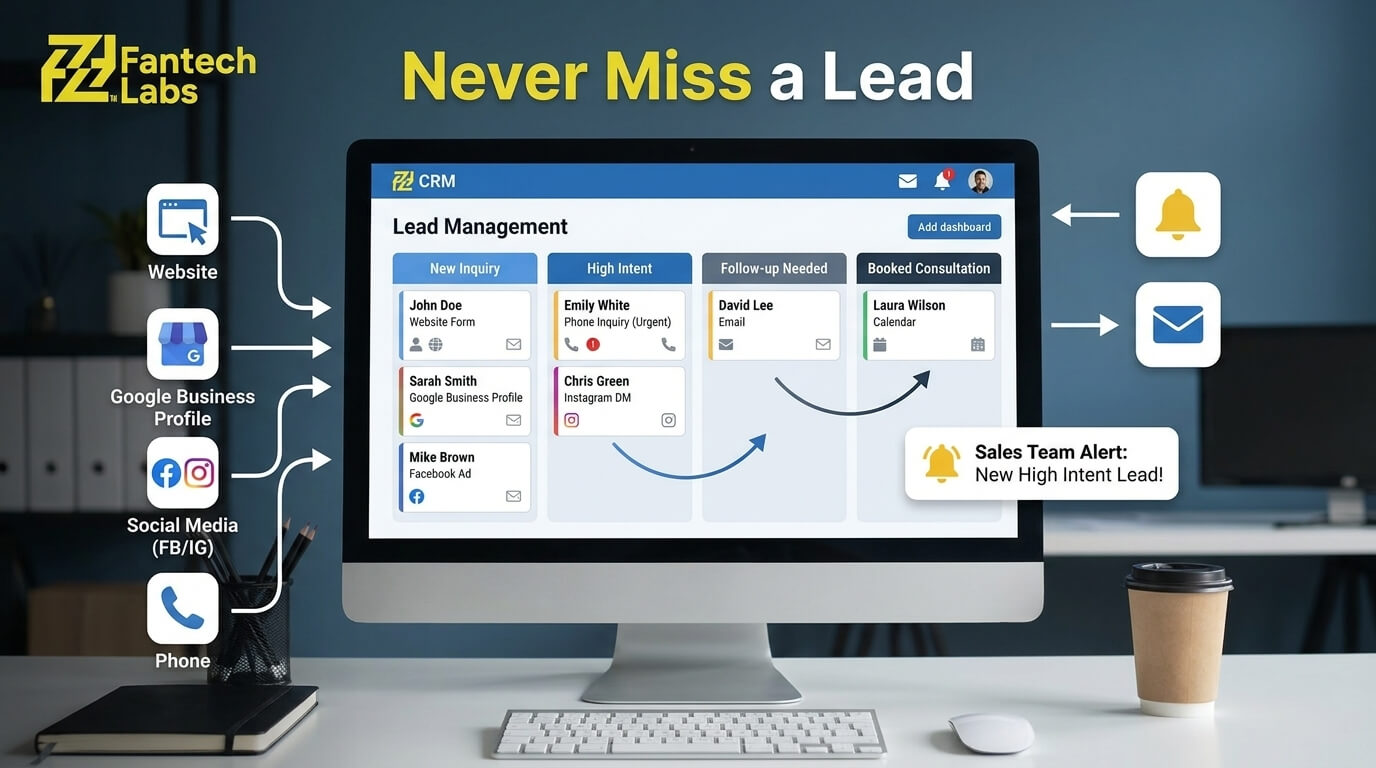
Many businesses generate leads but struggle with consistent follow-up.
AI automation can help businesses:
- Track incoming leads
- Prioritize high-intent prospects
- Send automated responses
- Trigger sales workflows
- Improve conversion consistency
For service-based businesses, faster lead handling often directly impacts revenue generation.
Real AI Automation Use Cases for Calgary Businesses
AI automation is most valuable when applied to practical operational problems.
Below are common examples of how small businesses in Calgary are using automation systems today.
Local Service Businesses
Home service companies use automation to:
- Handle booking requests
- Send appointment reminders
- Manage estimate follow-ups
- Organize customer inquiries
This reduces missed calls and improves scheduling efficiency.
Real Estate Businesses
Real estate teams use AI systems for:
- Lead capture automation
- Property inquiry responses
- Client follow-up sequences
- CRM workflow organization
Automated communication helps agents respond faster to potential buyers and sellers.
Healthcare and Clinics
Clinics and healthcare providers use automation for:
- Appointment scheduling
- Patient reminders
- Intake forms
- Follow-up communication
This reduces administrative workload while improving patient communication.
Retail and E-Commerce
Retail businesses use AI automation to:
- Recover abandoned carts
- Respond to customer questions
- Automate inventory alerts
- Personalize marketing campaigns
This improves operational efficiency while supporting customer retention.
Why AI Automation ROI Matters for Small Businesses
Small business owners often ask one important question before investing in automation:
What is the return on investment?
The strongest ROI usually comes from reducing repetitive operational work and improving response speed.
Common business benefits include:
- Lower administrative workload
- Faster customer communication
- Improved lead conversion
- Reduced manual errors
- Better workflow consistency
- Increased operational scalability
Unlike traditional software systems that require large implementation cycles, many modern automation platforms can integrate gradually into existing workflows.
This makes AI adoption more accessible for smaller organizations with limited resources.
Why AI Automation Is Becoming a Competitive Advantage in Canada
Canadian small businesses are operating in an increasingly digital marketplace.
Companies that respond faster, automate repetitive tasks, and improve operational efficiency are often better positioned to compete.
Businesses relying entirely on manual workflows may struggle with:
- Slow customer communication
- Internal inefficiencies
- Scaling limitations
- Higher operational costs
AI automation helps businesses modernize operations without dramatically increasing staffing requirements.
For many Calgary businesses, automation is shifting from an optional technology investment to a long-term operational strategy.
What Kind of ROI Can Small Businesses Expect From AI Automation?
The return on investment from AI automation usually comes from saving time, improving consistency, and increasing operational efficiency.
For many small businesses in Calgary, the biggest gains are not always dramatic cost reductions. Instead, the real value often comes from removing workflow bottlenecks that slow growth.
AI systems can help businesses:
- Respond to leads faster
- Reduce repetitive administrative work
- Improve customer communication
- Increase team productivity
- Reduce missed opportunities
- Scale operations more efficiently
The exact ROI depends on the business model, operational complexity, and how automation is implemented.
Real AI Automation Examples for Small Businesses
AI automation works best when it solves specific operational problems.
Below are practical examples of how businesses improve workflows using automation systems.
Example 1: Lead Response Automation for a Service Business
A local service company receives multiple inquiries daily through:
- Website forms
- Google Business Profile
- Social media
- Phone calls
Without automation, follow-ups may be delayed or inconsistent.
An AI automation workflow can:
- Instantly respond to inquiries
- Capture lead information
- Send appointment booking links
- Notify the sales team
- Organize customer data inside a CRM
This improves response speed and reduces lead loss.
For many service businesses, faster communication directly impacts revenue opportunities.
Example 2: Appointment Automation for Clinics
Healthcare clinics and wellness businesses often spend significant time managing scheduling tasks.
AI-powered systems can automate:
- Appointment confirmations
- Reminder messages
- Intake forms
- Follow-up communication
- Rescheduling workflows
This reduces administrative pressure while improving the customer experience.
Automation also helps reduce missed appointments, which can affect operational efficiency and revenue consistency.
Example 3: AI Chat Systems for Customer Support
Many small businesses struggle to answer customer questions quickly outside business hours.
AI chat systems can help by handling:
- Basic customer questions
- Service information
- Booking requests
- Lead qualification
- Contact collection
This allows businesses to maintain customer engagement even when staff are unavailable.
Modern AI chat tools can also integrate with CRM systems, calendars, and internal workflows.
Why Businesses Often Fail With AI Automation
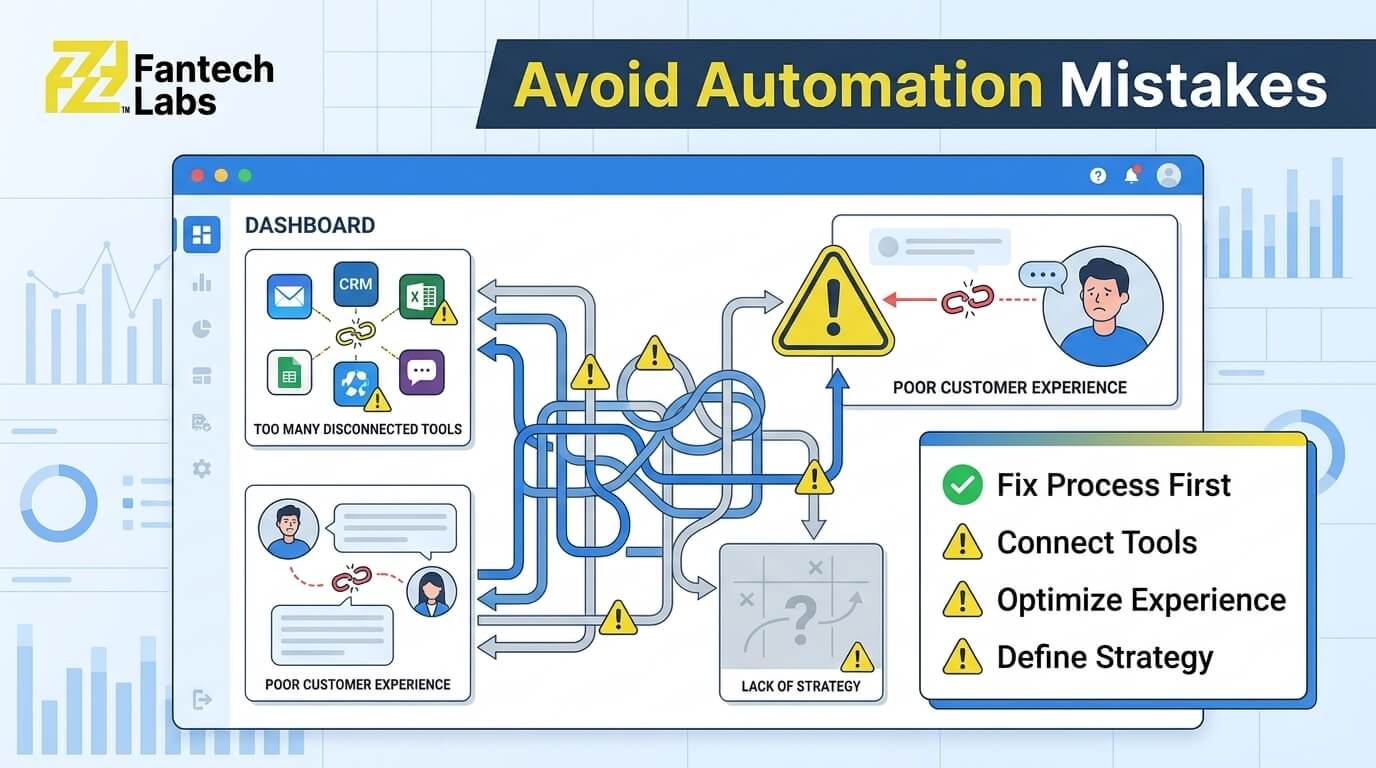
Many companies invest in AI tools without a clear operational strategy.
This usually leads to poor implementation and weak results.
Automation works best when businesses first identify repetitive tasks that create operational friction.
Common AI Automation Mistakes
Automating Broken Processes
If an existing workflow is disorganized, automation alone will not solve the problem.
Businesses should simplify workflows before automating them.
Using Too Many Tools
Some businesses implement multiple disconnected platforms that create operational complexity instead of efficiency.
Successful automation often focuses on fewer systems working together properly.
Ignoring Customer Experience
Automation should improve customer interaction, not create frustration.
Over-automation without human oversight can reduce service quality.
Expecting Instant Results
AI automation improves operational systems over time.
Businesses usually see stronger results after workflows are refined and optimized.
How Small Businesses Can Start With AI Automation
Many business owners assume automation requires major technical infrastructure.
In reality, smaller businesses can begin with focused operational improvements.
The best starting point is identifying repetitive tasks that consume time daily.
Start With Operational Bottlenecks
Good automation opportunities often include:
- Lead follow-ups
- Appointment scheduling
- Customer support requests
- Invoice reminders
- CRM organization
- Email workflows
- Internal notifications
Automating one workflow successfully is often more valuable than attempting to automate everything at once.
Focus on High-Frequency Tasks
The strongest automation ROI usually comes from tasks repeated consistently.
Even saving small amounts of time daily can create significant operational improvements over months and years.
What AI Automation Tools Are Small Businesses Using?
Small businesses today have access to a wide range of AI and workflow automation platforms.
These systems can support:
- Customer communication
- CRM workflows
- Sales automation
- Marketing operations
- Internal task management
- Reporting
- Scheduling
Many automation systems now integrate with tools businesses already use daily.
Examples include:
- CRM platforms
- Email marketing systems
- Booking software
- Customer support tools
- Accounting systems
- E-commerce platforms
The goal is creating connected workflows rather than isolated software systems.
Why AI Automation Supports Business Scalability
As businesses grow, manual operations become harder to manage efficiently.
Without automation, growth often creates:
- Slower response times
- Administrative overload
- Operational inconsistency
- Increased staffing pressure
Automation helps businesses scale workflows without increasing operational complexity at the same pace.
This is especially important for small businesses trying to grow while managing limited internal resources.
AI Automation Helps Teams Focus on Higher-Value Work
When repetitive tasks are automated, teams can spend more time on:
- Sales
- Customer relationships
- Strategy
- Operations
- Business development
This creates stronger operational efficiency without sacrificing service quality.
Why Calgary Businesses Are Prioritizing Operational Efficiency
Businesses across Calgary are increasingly focused on operational resilience and efficiency.
AI automation supports this by helping organizations:
- Streamline communication
- Reduce repetitive work
- Improve workflow consistency
- Enhance customer responsiveness
- Support long-term scalability
As digital competition continues increasing across Canada, operational efficiency is becoming a major competitive advantage for small businesses.
How Much Does AI Automation Cost for Small Businesses?
One of the biggest misconceptions about AI automation is that it requires enterprise-level budgets.
In reality, many small businesses in Calgary can begin automating workflows without major infrastructure investments.
The total cost depends on factors such as:
- Business size
- Workflow complexity
- Number of automation systems
- CRM integrations
- Customer support requirements
- Custom development needs
Some businesses start with simple automation systems for lead handling or appointment scheduling, while others implement larger operational workflows across multiple departments.
Why ROI Matters More Than Initial Cost
The real business question is not simply:
“How much does automation cost?”
The more important question is:
How much time, revenue, and operational efficiency does automation improve?
For many small businesses, operational inefficiencies already create hidden costs through:
- Missed leads
- Slow response times
- Manual administrative work
- Customer service delays
- Staff overload
- Workflow inconsistencies
AI automation often helps reduce these operational losses over time.
Which Industries Benefit Most From AI Automation in Calgary?
AI automation is not limited to technology companies.
Many industries across Alberta are adopting workflow automation to improve operational efficiency and customer communication.
Construction and Home Services
Construction companies and contractors often manage large volumes of:
- Client inquiries
- Scheduling requests
- Estimates
- Vendor coordination
- Follow-up communication
Automation helps organize these workflows while reducing manual administrative pressure.
Real Estate and Property Services
Real estate professionals use automation for:
- Lead management
- Property inquiry handling
- Client follow-ups
- Appointment scheduling
- CRM organization
This improves response speed and creates more consistent communication with potential buyers and sellers.
Healthcare and Wellness Businesses
Clinics, dental practices, and wellness providers benefit from automation through:
- Appointment reminders
- Intake workflows
- Customer communication
- Follow-up systems
- Internal coordination
This helps reduce scheduling inefficiencies while improving patient experience.
Retail and E-Commerce
Retail businesses increasingly use AI systems for:
- Customer support automation
- Product recommendations
- Marketing workflows
- Inventory notifications
- Order updates
This improves customer engagement while supporting operational scalability.
How AI Automation Improves Customer Experience
Customer expectations continue evolving across Canada.
People now expect businesses to respond quickly, provide accurate information, and maintain smooth digital experiences.
AI automation helps businesses improve customer interaction through:
- Faster response times
- Consistent communication
- Better follow-up processes
- Improved availability
- Reduced delays
Faster Communication Creates Competitive Advantage
Many small businesses lose potential customers simply because responses arrive too late.
Automation systems help businesses engage leads immediately, even outside normal business hours.
This is especially important for service-based industries where customers often contact multiple providers before making decisions.
Better Follow-Up Improves Customer Retention
Consistent communication helps businesses maintain stronger customer relationships.
Automation workflows can help manage:
- Follow-up reminders
- Review requests
- Customer updates
- Re-engagement campaigns
- Ongoing support communication
This improves customer experience while reducing manual workload for internal teams.
Why AI Automation Is Becoming a Long-Term Business Strategy
AI automation is no longer viewed only as a short-term operational tool.
Many businesses now see automation as part of their long-term growth strategy.
As competition increases, businesses that rely entirely on manual operations may struggle with:
- Scaling efficiently
- Maintaining response speed
- Managing operational consistency
- Handling increasing customer demand
Automation helps businesses create systems that support sustainable growth.
Operational Efficiency Supports Scalability
As businesses expand, operational complexity increases.
Without automation, growth often creates additional pressure on:
- Staffing
- Communication
- Administration
- Workflow management
AI systems help businesses scale operations more efficiently while maintaining service quality.
Why Human Oversight Still Matters
AI automation is designed to support business operations, not replace human expertise entirely.
Successful businesses combine automation with human decision-making.
AI systems work best when handling:
- Repetitive tasks
- Workflow organization
- Basic communication
- Data processing
- Scheduling
- Notifications
Human teams remain essential for:
- Strategy
- Relationship building
- Sales conversations
- Customer trust
- Complex problem-solving
The most effective businesses use automation to improve productivity while keeping human interaction where it matters most.
What Small Businesses Should Prioritize Before Implementing AI
Before implementing automation, businesses should evaluate their operational priorities carefully.
Important questions include:
Which Tasks Consume the Most Time?
Identifying repetitive operational bottlenecks is often the best starting point.
Where Are Leads Being Lost?
Slow response times and inconsistent follow-up often create revenue loss.
Which Processes Create Administrative Pressure?
Automation should reduce operational friction rather than add complexity.
Which Systems Need Better Integration?
Disconnected workflows often reduce efficiency across teams.
A focused automation strategy typically delivers better results than implementing too many systems at once.
Why AI Automation Adoption Is Accelerating Across Canada
Canadian businesses are increasingly investing in digital efficiency and workflow modernization.
AI automation helps organizations:
- Improve operational consistency
- Reduce repetitive manual work
- Respond faster to customers
- Support scalable growth
- Increase productivity
For many Calgary small businesses, automation is becoming part of a broader digital transformation strategy focused on long-term operational resilience.
What Is the Future of AI Automation for Small Businesses?
AI automation is evolving from a productivity tool into a core business infrastructure strategy.
Small businesses across Calgary and Canada are increasingly integrating AI into daily operations because customer expectations, operational demands, and digital competition continue rising.
In the coming years, businesses will likely rely more heavily on AI systems for:
- Customer communication
- Workflow coordination
- Operational reporting
- Lead qualification
- Marketing personalization
- Internal process management
The businesses that adapt early may gain operational advantages in efficiency, responsiveness, and scalability.
Why AI Automation Is Becoming Essential for Competitive Growth
Small businesses often compete against larger organizations with bigger teams and larger operational budgets.
AI automation helps smaller companies operate more efficiently without dramatically increasing staffing costs.
This creates opportunities to:
- Respond faster to customers
- Improve workflow consistency
- Reduce administrative overload
- Scale operations more effectively
- Increase productivity across teams
As digital adoption continues expanding across Canada, operational efficiency is becoming one of the strongest competitive differentiators for small businesses.
Automation Supports Sustainable Growth
Growth becomes difficult when operations rely entirely on manual processes.
Without automation, businesses may experience:
- Slower communication
- Increased staff pressure
- Workflow bottlenecks
- Missed opportunities
- Inconsistent customer experiences
AI systems help create repeatable operational processes that support long-term scalability.
How Small Businesses Should Approach AI Implementation
The most successful AI automation strategies usually start with operational clarity.
Instead of implementing automation everywhere at once, businesses should focus on solving specific operational problems first.
Step 1: Identify Repetitive Workflows
Businesses should review daily operations and identify tasks that consume unnecessary time.
Common examples include:
- Manual follow-ups
- Appointment coordination
- Data entry
- CRM updates
- Lead routing
- Customer support inquiries
These repetitive processes are often ideal candidates for automation.
Step 2: Prioritize Customer Experience
Automation should improve customer interaction, not complicate it.
The best systems create:
- Faster response times
- Better communication consistency
- Smoother operational experiences
- Reduced waiting times
Customer-focused automation usually produces stronger long-term business results.
Step 3: Integrate Existing Business Systems
Disconnected tools often reduce efficiency.
Businesses should prioritize automation systems that integrate with existing platforms such as:
- CRM software
- Booking systems
- Email platforms
- Customer support tools
- Internal communication systems
Connected workflows create more operational visibility and consistency.
Why AI Automation Requires Strategic Planning
AI automation is most effective when aligned with business goals.
Companies that implement automation without clear operational objectives often struggle to see measurable improvements.
Successful automation strategies typically focus on:
- Efficiency improvements
- Lead management
- Customer communication
- Workflow consistency
- Operational scalability
- Time savings
The goal is not adopting AI simply because it is trending.
The goal is solving real operational problems that impact growth and profitability.
How Fantech Labs Helps Small Businesses Implement AI Automation
Fantech Labs helps small businesses build practical AI automation systems focused on operational efficiency, workflow improvement, and scalable digital growth.
Instead of offering generic automation setups, the focus is on identifying business bottlenecks and building systems that improve day-to-day operations.
This can include:
- AI-powered workflow automation
- Lead management systems
- Customer communication automation
- CRM integrations
- Business process optimization
- AI chat implementation
- Operational workflow design
For many businesses, the objective is not replacing teams. The objective is helping teams operate more efficiently while improving customer responsiveness.
Frequently Asked Questions About AI Automation for Small Businesses
Is AI automation only for large companies?
No. Many modern automation tools are designed specifically for small and mid-sized businesses.
What business tasks can AI automate?
AI automation can support:
- Customer communication
- Appointment scheduling
- Lead management
- CRM workflows
- Reporting
- Email automation
- Administrative processes
Does AI automation replace employees?
In most cases, automation supports employees by reducing repetitive manual work rather than replacing core human roles.
How quickly can businesses see results?
Results vary depending on the workflow being automated. Many businesses begin seeing operational improvements after implementing high-frequency workflow automations.
Is AI automation expensive for small businesses?
Costs depend on workflow complexity and business needs. Many businesses start with smaller automation systems before expanding gradually.
Final Thoughts on AI Automation for Calgary Small Businesses
AI automation is changing how small businesses manage operations, customer communication, and growth.
For many businesses in Calgary, automation is becoming less about experimentation and more about operational necessity.
Companies that improve workflow efficiency, reduce repetitive work, and strengthen customer responsiveness are often better positioned for sustainable growth in an increasingly digital business environment.
The most effective automation strategies focus on practical operational improvements rather than unnecessary complexity.
Businesses that approach AI strategically can improve productivity, customer experience, and long-term scalability without dramatically increasing operational overhead.
Conclusion
AI automation is helping small businesses across Calgary modernize operations and improve efficiency in practical ways.
From customer support and lead management to scheduling and workflow organization, automation systems are reducing manual workload while improving operational consistency.
For small businesses in Canada, the real value of AI automation often comes from:
- Faster communication
- Improved workflow efficiency
- Better customer experiences
- Scalable operations
- Reduced administrative pressure
As digital competition continues increasing, businesses that invest in operational efficiency and workflow modernization may gain a stronger long-term competitive advantage.
About the Author
Written by Ali Raza, Lead Enterprise Architect & Integration Specialist at Fantech Labs. Ali specializes in helping Canadian B2B companies and Calgary SMBs bridge the gap between business strategy and technical execution. With deep expertise in workflow automation, AI system integration, and CRM architecture, he transforms fragmented manual tasks into unified, high-performance digital ecosystems that drive measurable ROI.