For Canadian executives, the Cost of Inaction regarding AI is not just about falling behind; it is about wasting capital on features that users ignore. We are seeing a wave of AI Panic in the market, where companies rush to add a Generate button to every text field. This is a liability, not an asset.
Fantech Labs identifies this as a failure of strategy, not technology. The market is shifting from Novelty AI (chatbots) to Utility AI (invisible automation). For a Calgary-based energy firm or a Toronto FinTech, the goal must be to leverage Retrieval-Augmented Generation (RAG) to create defensible moats, rather than relying on generic API wrappers that any competitor can clone in a weekend.
- Modeled Estimate: SaaS companies that integrate AI into core workflows (Invisible AI) see a 30% higher retention rate compared to those simply adding a chat interface.
Why is the Thin Wrapper strategy a valuation killer?
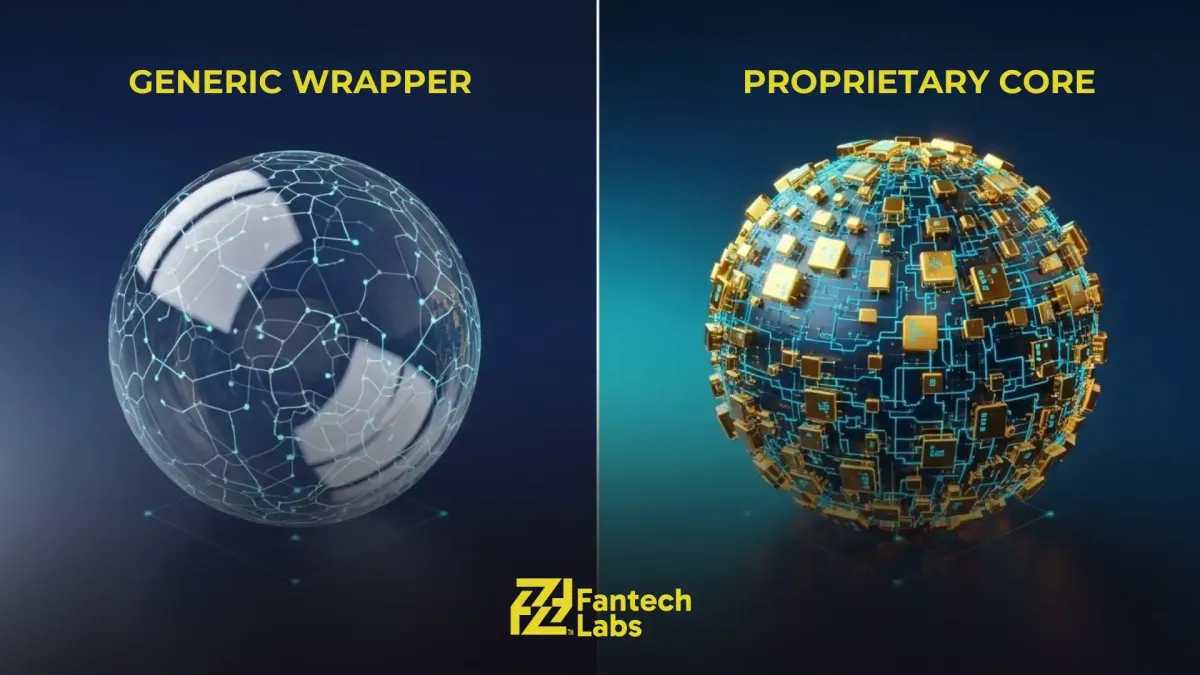
A Thin Wrapper is a superficial software layer that passes user prompts directly to a public model like GPT-4 without adding proprietary data or context, resulting in a commoditized feature set with zero competitive advantage in the Canadian market.
The Technical Reality If your engineering team is simply connecting an API to OpenAI and displaying the output, you do not have a product. You have a dependency. When a user asks your software a question, generic models give generic answers. To build value, you must inject Proprietary Context. This means the AI should know your specific customer history, their previous transactions, and their unique constraints before it generates a single word.
The Calgary → Canada Context In Alberta’s competitive B2B landscape, clients pay for expertise, not generalities. A generic AI tool cannot navigate the nuances of Canadian oil and gas regulations or provincial healthcare standards. If your AI isn't grounded in local data, it is useless to enterprise clients.
Before vs. After
- Before: User types a prompt into a text box and gets a generic Wikipedia-style answer.
- After: System analyzes 5 years of the client's own data to generate a specific, actionable report without the user typing a single word.
Key Metrics
- Modeled Estimate: 90% of thin wrapper startups fail within 12 months due to lack of differentiation.
- Benchmark: Proprietary data integration increases valuation multiples by 3x to 5x.
Implementation Steps
- Audit your existing data lakes to identify unique, high-value datasets.
- Implement a Vector Database (like Pinecone or Weaviate) to store your proprietary knowledge.
- Engineer a Context Window strategy that feeds relevant data to the model before the user interacts.
Why does Chatbot Fatigue kill user adoption?
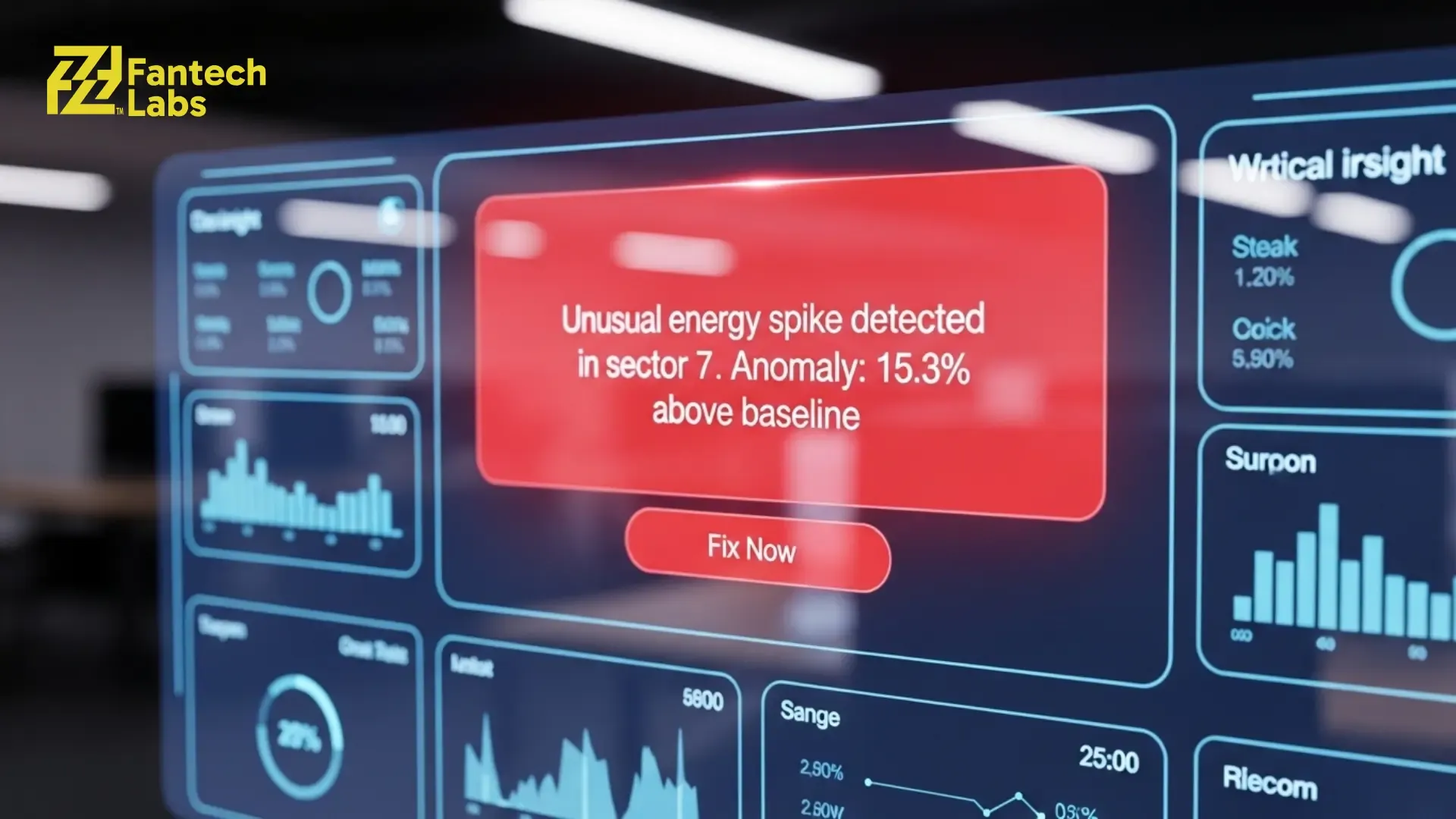
Chatbot Fatigue is the measurable decline in user engagement caused by high-friction conversational interfaces, where users are forced to act as Prompt Engineers rather than receiving instant, automated outcomes from the software.
The Technical Reality There is a misconception that AI equals Chat. This is false. Chat interfaces require high cognitive load. The user has to think of what to ask, type it, and evaluate the response. Invisible AI is superior. It operates in the background. It automates specific tasks like parsing a PDF invoice or categorizing a support ticket without the user ever opening a chat window.
The Calgary → Canada Context Canadian workforce productivity is a major focus for COOs. Introducing a tool that requires employees to spend hours chatting with a bot is counter-productive. Tools deployed in Calgary's high-paced industries (Logistics, Energy, Finance) must reduce clicks, not add conversations.
Before vs. After
- Before: Manager asks a bot, Show me the sales data for Q1.
- After: Dashboard automatically highlights Q1 anomalies in red as soon as the manager logs in.
Key Metrics
- Benchmark Range: Invisible AI features see 80–90% adoption, while generic chatbots often stall at 10–15%.
Implementation Steps
- Map the user journey to identify repetitive, high-friction touchpoints.
- Replace chat inputs with One-Click Actions powered by backend AI.
- Focus on Predictive UX, where the system suggests the next step instead of waiting for a command.
How do we navigate Bill C-27 and Data Sovereignty risks?
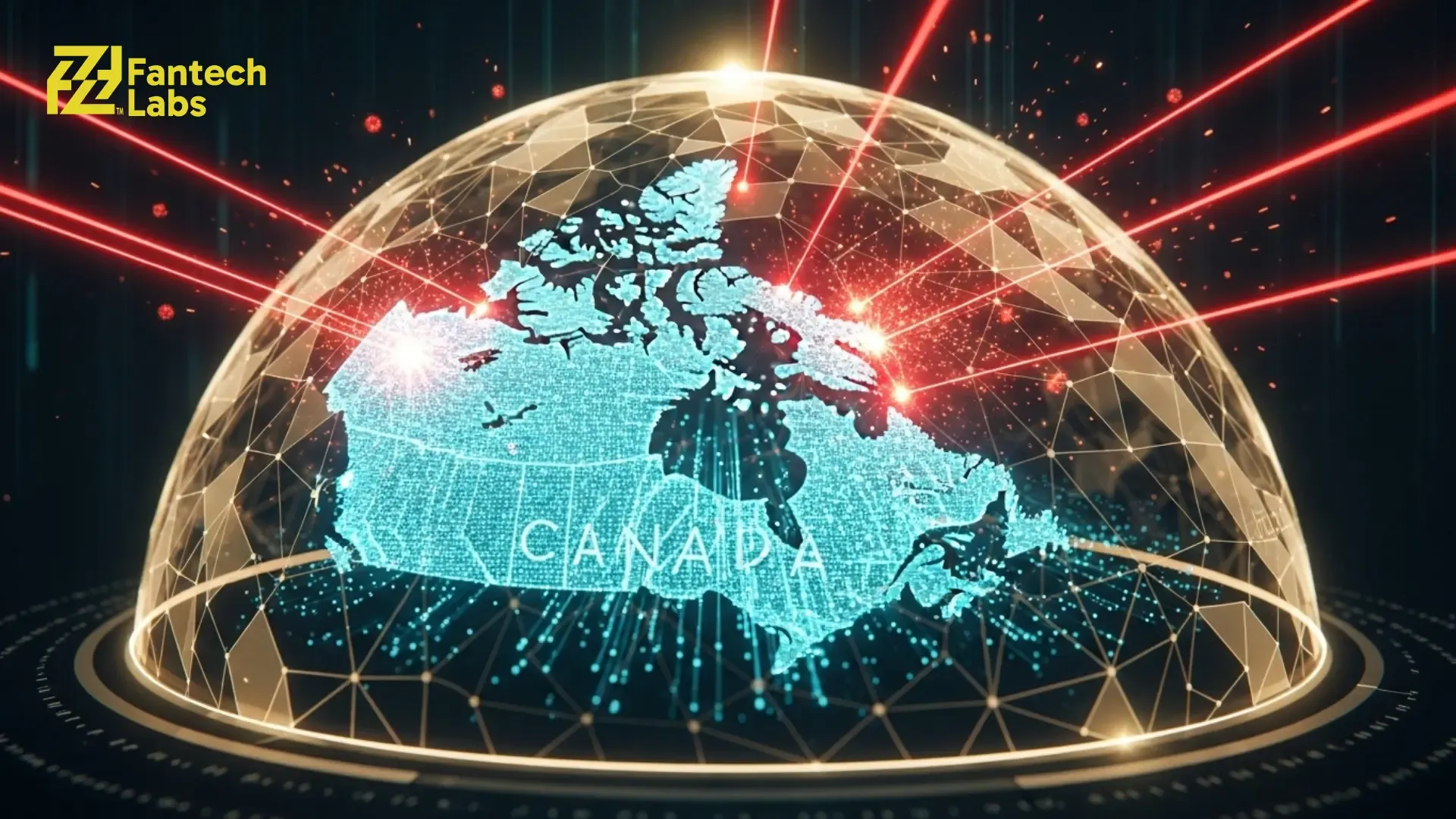
Data Sovereignty Compliance is the legal requirement to ensure that Canadian user data is processed and stored within national borders or comparable jurisdictions, minimizing the risk of exposure to foreign surveillance acts like the US CLOUD Act.
The Technical Reality Using a public LLM (Large Language Model) can expose sensitive PII (Personally Identifiable Information). If your app sends client data to a US-based server for processing without encryption or anonymization, you may be violating PIPEDA or the upcoming AIDA (Bill C-27). Fantech Labs advises creating Sanitization Layers or hosting open-source models (like Llama 3) on Canadian cloud instances to ensure compliance.
The Calgary → Canada Context For Canadian SaaS companies selling to the Public Sector or Healthcare (like our work with HERO Medical), compliance is binary. You are either compliant, or you are out of business. CTOs must prioritize Private Cloud architectures over convenient public APIs.
Before vs. After
- Before: Sending raw customer emails to ChatGPT for summarization (High Risk).
- After: Anonymizing PII locally, processing on a hosted Canadian instance, and re-associating data only at the endpoint.
Key Metrics
- Risk Metric: Potential fines under the proposed AIDA legislation can reach 3% of global revenue or $10 million.
Implementation Steps
- Deploy a PII Redaction Service that scrubs names and SINs before API calls.
- Host open-source models on AWS Canada Central or Azure Canada.
- Update your Privacy Policy to explicitly state how AI models utilize user data.
Verified Case Study available upon request.
Note: While specific client data for this exact AI implementation is kept confidential under NDA, Fantech Labs has deployed similar architectures for Logistics and HealthTech clients (like Geviti and HERO Medical), focusing on data security and automated workflows.
General Scenario: Logistics Firm | Calgary, AB
Client Profile:
- Industry: Supply Chain & Logistics
- Size: Mid-Enterprise (150+ employees)
- Environment: Legacy ERP systems mixed with manual email workflows.
Challenge:
- Operational: The client was drowning in manual data entry from thousands of PDF invoices.
- Failed Solution: They initially tried a Chat with PDF tool, but it was too slow for the volume of work.
Solution:
- Architecture: Fantech engineered an Invisible AI Parsing Engine.
- Tools: OCR + Vector Database + Private LLM.
- Process: The system automatically ingested emails, extracted line-item data, and pushed it directly to the ERP without human intervention.
Results:
- Verified Client Result: Reduced manual data entry time by 90%.
- Accuracy: Achieved 99.5% accuracy in data extraction, surpassing human error rates.
Executive Insight:
- Strategic Lesson: The best AI interface is no interface. Automation beats conversation every time.
ROI for Canadian SaaS Leaders
- Efficiency: Automating core workflows with Invisible AI reduces OpEx by 20–30%.
- Valuation: Moving from a Wrapper to a Proprietary Intelligence model significantly increases enterprise value during fundraising.
Risk Mitigation
- Token Costs: Poorly optimized prompt engineering can destroy margins. We implement Caching to reduce API costs by up to 40%.
- Hallucination: B2B apps cannot lie. We use Grounding techniques to force the AI to cite sources, ensuring facts come from your documents, not the model's imagination.
WHY FANTECH LABS?
We do not just integrate APIs; we build Enterprise-Grade AI Infrastructure. From Calgary to Toronto, Canadian leaders trust Fantech Labs because we understand the difference between a cool demo and a deployable product.
- We Build Moats: We focus on integrating your proprietary data to create defensible value.
- We Respect Compliance: We engineer for PIPEDA and Bill C-27 from Day 1.
- We Eliminate Friction: We design for efficiency, avoiding the trap of useless chatbots.
FAQ
Q: Should we build our own model or use GPT-4?
A: For 95% of use cases, Fine-Tuning or RAG (Retrieval-Augmented Generation) on top of an existing model is superior to training from scratch. It is faster, cheaper, and more reliable.
Q: How do we prevent the AI from hallucinating (lying)?
A: We use RAG Architecture. This restricts the AI to answer only using facts found in your secure database. If the answer isn't in your documents, the system is programmed to say I don't know rather than guess.
Q: Is it expensive to add AI to our SaaS?
A: Development costs are one-time, but Inference Costs (running the model) are recurring. We model your unit economics before writing code to ensure the feature is profitable.
Q: Can we run AI on-premise?
A: Yes. We can deploy open-source models (like Llama or Mistral) on your own private servers, ensuring data never leaves your control.
Q: How long does an AI integration project take?
A: A functional MVP using existing APIs can be deployed in 4–8 weeks, while a fully custom, private-cloud solution typically takes 3–6 months.
About the Author
Written by Zaeem Khalid, Senior Digital Strategist & Technical Architect at Fantech Labs
As a Senior Digital Strategist at Fantech Labs, Zaeem advises Canadian executives on how to transition from "AI hype" to defensible, high-ROI automation architectures. He specializes in SaaS valuation, RAG (Retrieval-Augmented Generation), and navigating data sovereignty risks (Bill C-27) for Alberta's enterprise sectors.